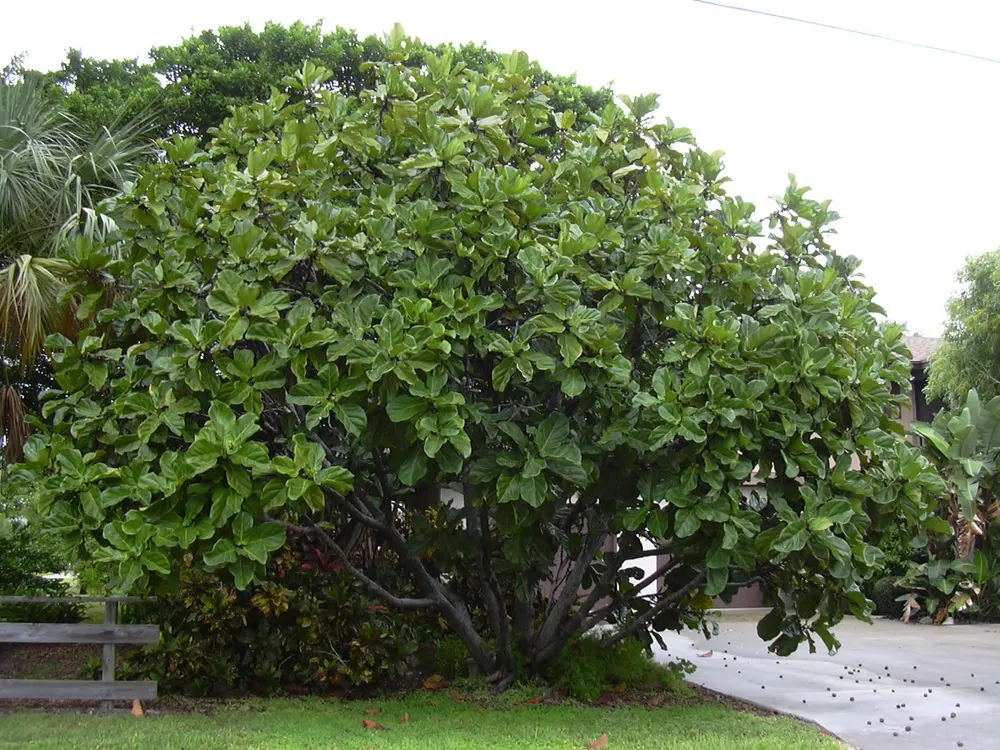
Photo: Forest & Kim Starr, CC BY 3.0 (via Wikimedia Commons)
Fiddle-Leaf Fig
Ficus lyrata
Also known as Fiddle-leaf fig tree, Banjo fig, Lyre-leaf fig
Key benefits
✦Traditional uses
✦The fiddle-leaf fig has never held a place in traditional herbal medicine or the kitchen. Its story is a horticultural one rather than a healing one, a rainforest understory tree that Victorian plant hunters and, much later, midcentury interior decorators prized for its enormous, glossy, violin-shaped leaves. In its native West and Central Africa, it grows as a towering forest tree, sometimes rooting on the branches of other trees before sending roots down to the soil. In homes and offices worldwide it has become one of the most recognizable statement plants, valued purely for the drama and warmth its foliage brings to a room.
How to grow & use it
✦The full apothecary for Fiddle-Leaf Fig
Traditional remedies and step-by-step preparations, a complete growing guide, and how to harvest, dry, and store it, all unlocked with HerbLens Unlimited.
- ✦Remedies & preparations
- ✦ Growing guide
- ✦Harvest & storage
From under $6 a month. Free plant identifications always included.
- ✦Rubber plant
- ✦Monstera deliciosa
- ✦Snake plant
- ✦Rubber plant (Ficus elastica)
- ✦Banana leaf plant (Musa)
“For the bare corner that is asking for something bold, green, and a little bit rainforest.”
Every fiddle-leaf fig leaf is shaped like a violin, which is exactly how the plant got both its common name and its scientific one, since lyrata means lyre-shaped in Latin.
The milky sap can irritate skin, eyes, and mouth, and it's toxic to cats and dogs if chewed, so keep it away from pets and children.