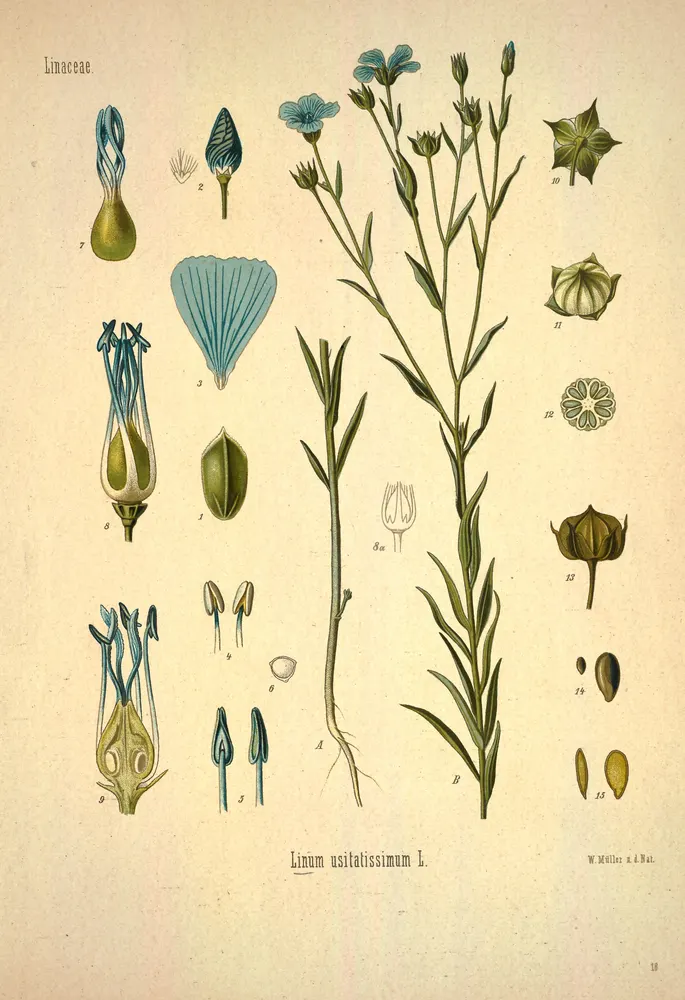
Photo: Brandt, Wilhelm; Gürke, M.; Köhler, F. E.; Pabst, G.; Schellenberg, G.; Vogtherr, Max., Public domain (via Wikimedia Commons)
Flax
Linum usitatissimum
Also known as Common Flax, Linseed, Flaxseed
Key benefits
✦Traditional uses
✦Flax is one of humanity's oldest companions, cultivated along the Nile and the Euphrates for both its fiber and its seed long before written history began. The ancient Egyptians spun its stalks into linen fine enough for royalty and pressed its seeds for food and lamp oil, while Hippocrates himself is said to have recommended flaxseed for easing abdominal discomfort and inflammation. Across generations of folk practice, the whole or crushed seed was steeped into a soothing, mucilage-rich tea for a gently upset stomach, and the same slippery gel was spread as a poultice to calm irritated skin. It has long been considered a humble, steady sort of remedy, the kind kept in the pantry rather than the medicine chest.
How to grow & use it
✦The full apothecary for Flax
Traditional remedies and step-by-step preparations, a complete growing guide, and how to harvest, dry, and store it, all unlocked with HerbLens Unlimited.
- ✦Remedies & preparations
- ✦ Growing guide
- ✦Harvest & storage
From under $6 a month. Free plant identifications always included.
- ✦Chamomile
- ✦Slippery Elm
- ✦Psyllium
- ✦Chia seed
- ✦Psyllium husk
“When the body asks for something gentle and steady, morning after quiet morning.”
Flax fibers recovered from a cave in the Republic of Georgia have been dated to over 30,000 years old, making it one of the very first plants humans learned to work with, long before flax was ever farmed.
Grind flaxseed before eating and take it with plenty of fluid, since the seeds swell and can be hard to digest otherwise. Don't eat unripe seeds or the green foliage, which contain small amounts of naturally occurring cyanide-forming compounds, and use caution with blood-thinning medication since flax's omega-3 content may add to its effect.