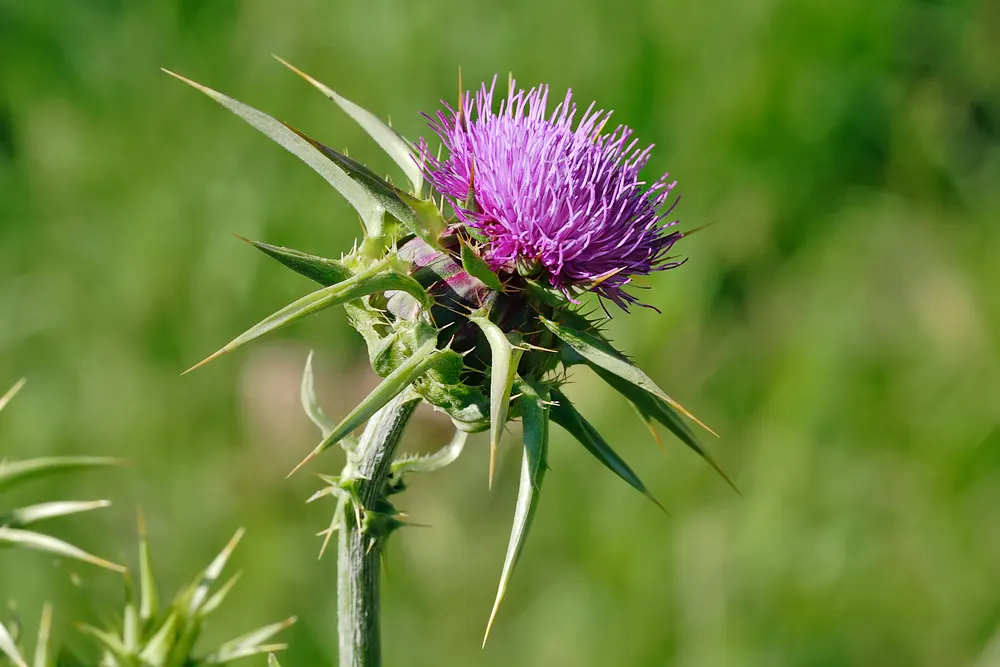
Photo: fir0002 flagstaffotos [at] gmail.com Canon 20D + Sigma 150mm f/2.8, GFDL 1.2 (via Wikimedia Commons)
Milk Thistle
Silybum marianum
Also known as Holy Thistle, Our Lady's Thistle, Marian Thistle, Mary Thistle, St. Mary's Thistle
Key benefits
✦Traditional uses
✦Milk thistle has been leaned on since antiquity, with Greek and Roman herbalists like Pliny the Elder recommending it for bile and liver complaints, and medieval European healers steeping the seeds for jaundice and 'sluggish' digestion. It traveled the world tucked into monastery gardens, prized as much for its dramatic, milk-veined leaves as for its bitter, protective seeds. By the nineteenth century it had earned a steady place in Western herbalism as the herb to reach for when the liver needed a friend, a reputation that eventually led modern researchers to isolate its signature compound, silymarin, from the very seeds herbalists had been steeping all along.
How to grow & use it
✦The full apothecary for Milk Thistle
Traditional remedies and step-by-step preparations, a complete growing guide, and how to harvest, dry, and store it, all unlocked with HerbLens Unlimited.
- ✦Remedies & preparations
- ✦ Growing guide
- ✦Harvest & storage
From under $6 a month. Free plant identifications always included.
- ✦Dandelion Root
- ✦Turmeric
- ✦Burdock Root
- ✦Dandelion Root
- ✦Artichoke Leaf
“For the herb that has stood by the liver since the days of Roman physicians, steadfast and unshowy.”
According to old folk legend, the white veins marbling the leaves were said to be drops of the Virgin Mary's milk, spilled while she nursed, which is how the plant earned both its common name and its species name, marianum.
Milk thistle is generally well tolerated, though it can cause mild digestive upset and may trigger allergic reactions in those sensitive to ragweed or daisies. It may also affect how the liver processes certain medications, so use caution if you take prescription drugs.