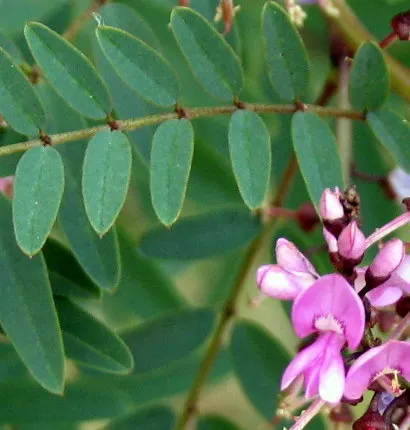
Photo: Eug, CC BY-SA 3.0 (via Wikimedia Commons)
Austral Indigo
Indigofera australis
Also known as Native Indigo, Australian Indigo, Sweet Indigo
Key benefits
✦Traditional uses
✦Austral Indigo is a plant known more for what it was used to do than for anything it was ever meant to be eaten or drunk. Aboriginal Australians across its range are recorded to have crushed the leaves and branches and placed them into still waterholes, where compounds released into the water would stupefy fish and make them easy to gather by hand, a technique used with several other native plants as well. The species also carries the family resemblance to Indigofera tinctoria, the classic source of true indigo dye, and colonial settlers took note of its potential as a local blue dye plant, though it was never cultivated commercially for that purpose the way its tropical relative was. Today it survives mostly as a garden shrub, valued for its drifts of pea flowers rather than for any place in the kitchen or medicine cabinet.
How to grow & use it
✦The full apothecary for Austral Indigo
Traditional remedies and step-by-step preparations, a complete growing guide, and how to harvest, dry, and store it, all unlocked with HerbLens Unlimited.
- ✦Remedies & preparations
- ✦ Growing guide
- ✦Harvest & storage
From under $6 a month. Free plant identifications always included.
- ✦Correa species
- ✦Grevillea species
- ✦Kangaroo paw (Anigozanthos)
- ✦Indigofera tinctoria (for dye purposes only)
- ✦Hardenbergia violacea (for a similar purple pea-flower display)
“For a hardy native drift of pink-purple blossom that hums with bees all spring, planted to be looked at and never to be steeped.”
The genus name Indigofera means indigo bearer, and while Austral Indigo is a cousin of the plant that gave the world true indigo dye, it earned its own reputation in Australia for a very different reason: Aboriginal communities used the crushed foliage to stun fish in waterholes, a clear sign of the potent compounds this pretty shrub carries in its leaves.
Austral indigo is not safe to eat. Aboriginal Australians traditionally used the crushed leaves to stupefy fish, and the wider Indigofera genus contains indospicine, a toxin linked to liver damage in horses, dogs, and other animals that graze on it or eat contaminated meat. Treat it strictly as an ornamental, keep grazing animals away, and seek immediate veterinary or medical help if ingestion is suspected.