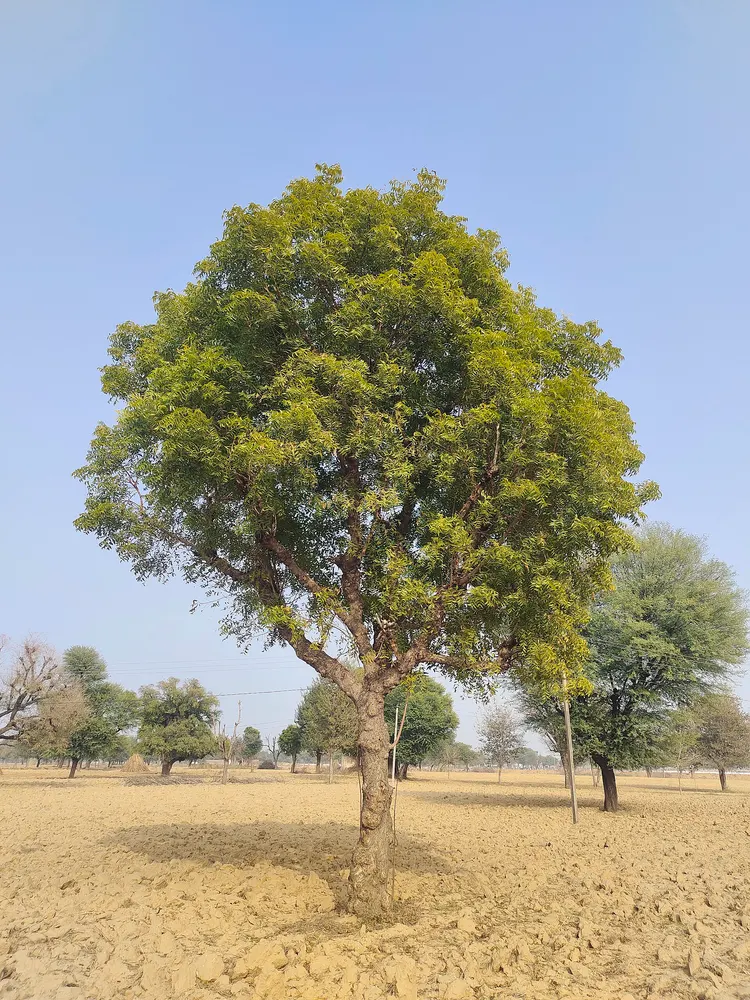
Photo: TheSlumPanda, CC BY-SA 4.0 (via Wikimedia Commons)
Neem
Azadirachta indica
Also known as Indian Lilac, Margosa, Nimtree, Village Pharmacy Tree
Key benefits
✦Traditional uses
✦In much of India, neem is simply called the village pharmacy, a tree so woven into daily life that almost nothing about it goes to waste. For generations its twigs were snapped fresh each morning and chewed into soft-bristled toothbrushes called datun, its leaves strung into garlands hung over doorways during festivals and times of illness, and its shade trusted enough that families planted a neem tree beside the house as a matter of course. In Ayurvedic and Siddha medicine, neem leaf has long held a reputation as a great purifier of the blood and skin, used topically for centuries to soothe irritated or troubled complexions and address minor skin complaints. It has also carried strong ties to protection and cleansing in folk custom, particularly around the goddess Shitala, whose devotees waved neem leaves for cooling and blessing during fevers.
How to grow & use it
✦The full apothecary for Neem
Traditional remedies and step-by-step preparations, a complete growing guide, and how to harvest, dry, and store it, all unlocked with HerbLens Unlimited.
- ✦Remedies & preparations
- ✦ Growing guide
- ✦Harvest & storage
From under $6 a month. Free plant identifications always included.
- ✦Turmeric
- ✦Tulsi (holy basil)
- ✦Aloe vera
- ✦Tea tree
- ✦Tulsi (holy basil)
“For the old, bitter guardian that has shaded and doctored Indian villages since long before anyone wrote its uses down.”
For thousands of years, people across South Asia started their morning by snapping a fresh neem twig and chewing one end into a soft brush, a tradition called datun that modern dentists have since found genuine merit in.
Neem oil is genuinely toxic if swallowed and has caused serious, sometimes fatal poisoning in infants and young children. It also has a traditional history as an abortifacient, so internal use should be avoided during pregnancy or while trying to conceive without medical guidance.