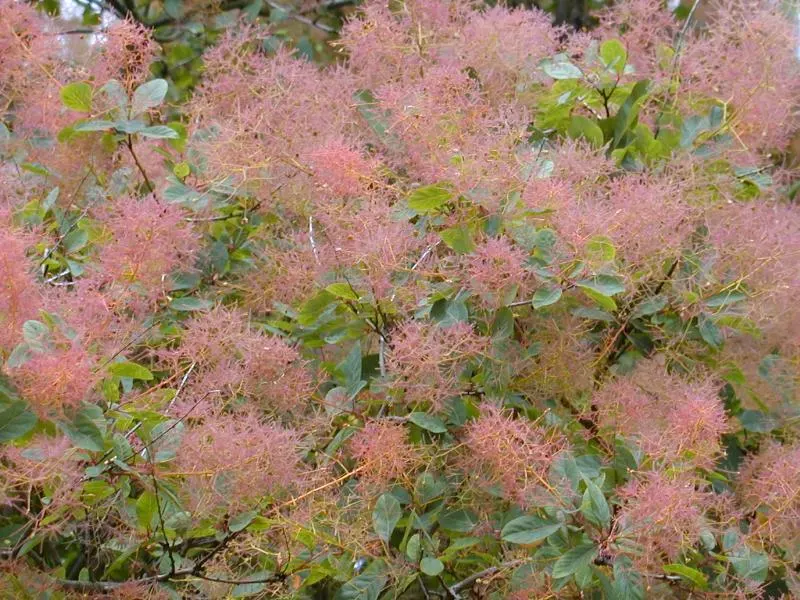
Photo: Alexander Dunkel, CC BY-SA 2.5 (via Wikimedia Commons)
Smoketree
Cotinus coggygria
Also known as Smokebush, Venetian Sumac, Wig Tree, Young Fustic
Key benefits
✦Traditional uses
✦Long before smoketree found its way into ornamental borders, its tannin-rich leaves were gathered in the folk traditions of the Balkans, Turkey, and the wider Mediterranean, where a strong leaf decoction was used as a gargle for sore throats and gums and as a wash for minor skin irritations. Its close cousin, sumac, shares this same puckering, astringent quality, and country healers often reached for whichever grew nearest. The wood itself carried its own quiet fame: dyers boiled the heartwood down to a warm yellow-orange dye called young fustic, once used to color wool, silk, and leather across Europe. Today smoketree is grown far more often for its beauty than its bark, but the old astringent uses are still remembered in the regions where it grows wild.
How to grow & use it
✦The full apothecary for Smoketree
Traditional remedies and step-by-step preparations, a complete growing guide, and how to harvest, dry, and store it, all unlocked with HerbLens Unlimited.
- ✦Remedies & preparations
- ✦ Growing guide
- ✦Harvest & storage
From under $6 a month. Free plant identifications always included.
- ✦Sage
- ✦Witch hazel
- ✦Chamomile
- ✦Sumac leaf
- ✦Witch hazel
“For a garden that wants to be wrapped in a cloud of smoke and thrives on the very neglect that would wilt fussier plants.”
The name smoketree comes from the airy, wig-like plumes of feathery pink to purplish hairs left behind on the spent flower stalks, which drift across the whole shrub through midsummer, giving it the look of a plant wreathed in smoke from a distance.
Smoketree is in the same family as poison ivy, and handling fresh sap or bruised leaves can mildly irritate sensitive skin, so patch test first. Its tannin-rich leaves can be harsh on the stomach in excess, so traditional use favored gargles and washes over drinking the decoction regularly.