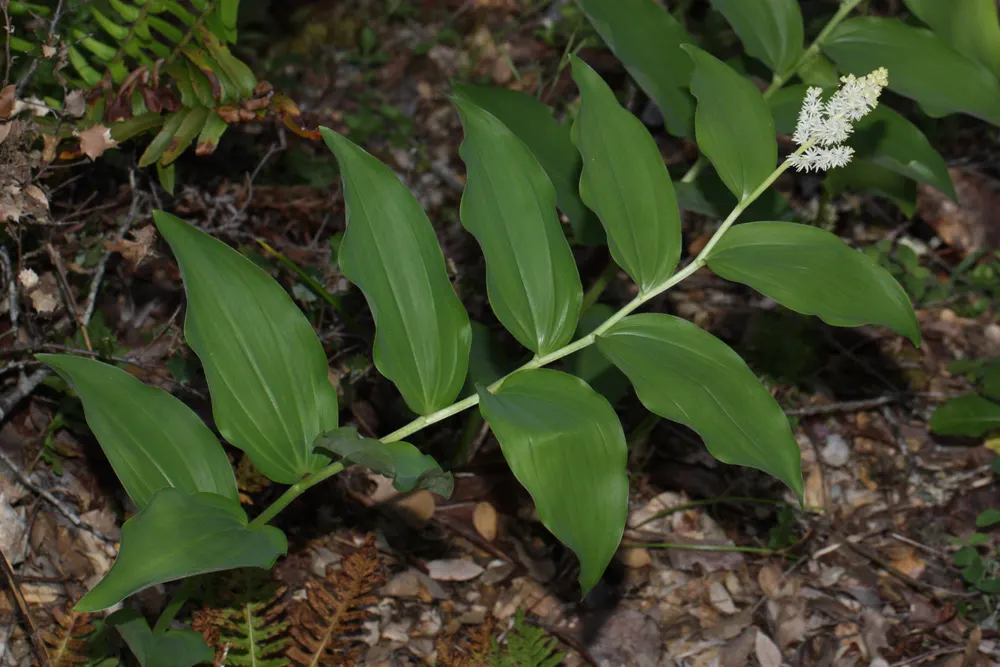
Photo: Walter Siegmund (talk), CC BY-SA 3.0 (via Wikimedia Commons)
False Solomon's Seal
Maianthemum racemosum
Also known as Solomon's Plume, False Spikenard, Treacleberry, Feathery Solomon's Seal, Smilacina racemosa
Key benefits
✦Traditional uses
✦Long before it had a Latin name, this arching woodland plant was a familiar presence in the medicine bundles of many Native American nations, who dug its knotty rhizome and pounded it fresh for wounds, bruises, and sores. Various tribes, including the Iroquois, Potawatomi, and Cherokee, brewed the root into a decoction for coughs, sore throats, and aches, and some used it to ease the discomforts of childbirth recovery. Its cousin, true Solomon's seal, gets most of the modern attention, but False Solomon's Seal carried its own quiet reputation as a trailside first aid plant, one you could dig on the spot and press directly to a cut or sting. The young shoots, gathered before the leaves unfurl, were also cooked and eaten as a spring green, much like asparagus.
How to grow & use it
✦The full apothecary for False Solomon's Seal
Traditional remedies and step-by-step preparations, a complete growing guide, and how to harvest, dry, and store it, all unlocked with HerbLens Unlimited.
- ✦Remedies & preparations
- ✦ Growing guide
- ✦Harvest & storage
From under $6 a month. Free plant identifications always included.
- ✦Plantain
- ✦Yarrow
- ✦Comfrey leaf
- ✦True Solomon's Seal (Polygonatum biflorum)
- ✦Solomon's plume root can rarely be swapped for wild ginger in poultice blends
“For the forager's eye that follows an arching stem to its feathery plume, and the trailside hand reaching for a poultice.”
Its ripe berries were once called treacleberries by foragers, because their bittersweet flavor, somewhere between molasses and cough syrup, was said to taste exactly like old-fashioned treacle candy.
Raw root and berries contain saponins and can cause nausea or a laxative effect if eaten raw or in quantity, so traditional use cooked them and kept doses modest. It closely resembles true Solomon's seal and young false hellebore, so correct identification is essential before foraging.