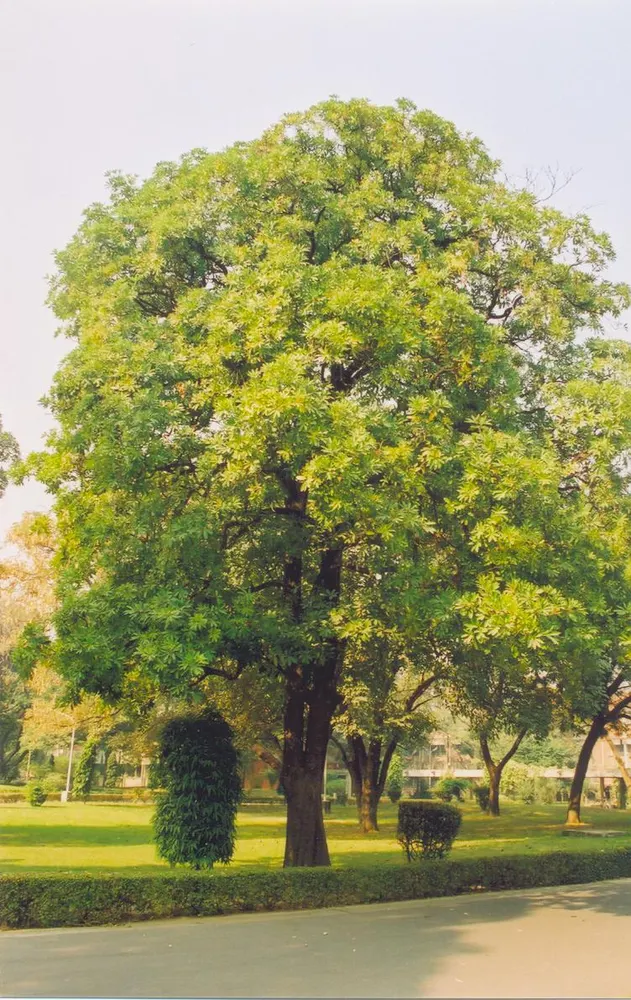
Photo: CC BY-SA 3.0 (via Wikimedia Commons)
Blackboard Tree
Alstonia scholaris
Also known as Devil's Tree, Saptaparni, Milkwood Pine, Ditta Bark, White Cheesewood
Key benefits
✦Traditional uses
✦Alstonia scholaris carries centuries of reputation across South and Southeast Asian folk medicine, where its intensely bitter bark was steeped, powdered, or fermented into tonics for fevers, malaria, and chronic diarrhea long before quinine reached local villages. In Ayurveda it is called saptaparni, meaning seven leaves, a nod to the whorled ring of leaves that circles each branch, and it appears in classical texts as a bitter tonic for the digestion and the blood. Healers in India, Sri Lanka, and Southeast Asia also turned to the leaves and milky latex for skin sores and respiratory complaints, treating the tree as something close to a village pharmacy standing at the forest edge. Its towering, almost otherworldly presence and strongly scented night flowers also earned it a place in local folklore, where some communities considered it a tree best approached with caution or respect.
How to grow & use it
✦The full apothecary for Blackboard Tree
Traditional remedies and step-by-step preparations, a complete growing guide, and how to harvest, dry, and store it, all unlocked with HerbLens Unlimited.
- ✦Remedies & preparations
- ✦ Growing guide
- ✦Harvest & storage
From under $6 a month. Free plant identifications always included.
- ✦Chirata
- ✦Ginger
- ✦Holy basil
- ✦Cinchona bark
- ✦Neem bark
“A giant of the old forests, wrapped in bitter bark and old caution.”
The species name scholaris comes from the tree's fine-grained, pale wood, which was once cut into writing boards and school blackboards across parts of Asia, giving this towering forest giant a second life in the classroom.
The bark and latex contain potent alkaloids that can cause vomiting and dizziness in excess, and the tree's strongly scented flowers are a known respiratory allergen linked to asthma flare-ups. Avoid ingesting any part of this plant.