Photo: CC BY-SA 3.0 (via Wikimedia Commons)
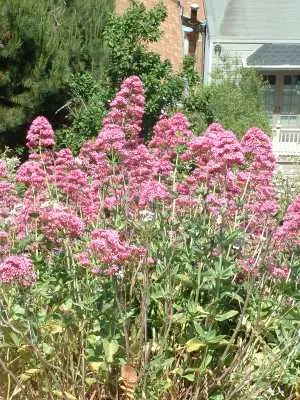
Red Valerian
Centranthus ruber
Also known as Jupiter's Beard, Spur Valerian, Kiss-Me-Quick, Fox's Brush, Devil's Beard
Key benefits
✦Traditional uses
✦Red valerian has spent centuries as a beloved cottage garden and wall plant, prized for the way its roots wedge into old mortar and soften the look of a castle ruin or garden boundary. Native to the Mediterranean, it was carried northward by gardeners and soon escaped over every wall it was planted beside, becoming a familiar sight on English chalk cliffs and old town walls. In leaner seasons, cooks in parts of Europe gathered the young shoots before flowering and ate them raw in salads or briefly boiled like spinach, valuing them as an easy, self-renewing green. Its name causes some confusion, since despite the family resemblance in scent and appearance, it is not the same plant as true Valerian, and the two carry very different histories of use.
How to grow & use it
✦The full apothecary for Red Valerian
Traditional remedies and step-by-step preparations, a complete growing guide, and how to harvest, dry, and store it, all unlocked with HerbLens Unlimited.
- ✦Remedies & preparations
- ✦ Growing guide
- ✦Harvest & storage
From under $6 a month. Free plant identifications always included.
- ✦Corn salad (mâche)
- ✦Wild rocket
- ✦Chives
- ✦Corn salad (mâche)
- ✦Young dandelion greens
“For old stone walls that need softening, and tender spring greens gathered before the flowers rise.”
Although it carries the name valerian and even smells faintly like it, Centranthus ruber is not related to true Valerian, Valeriana officinalis, at all. Its old-world habit of colonizing crumbling mortar earned it the nickname Jupiter's Beard, and it is still a common sight tumbling out of the cracks in centuries-old stone walls across Europe.
Red valerian is generally safe and its young leaves have long been eaten as a pot-herb. Despite the name, it is not true valerian (Valeriana officinalis), and the two should never be substituted for one another.