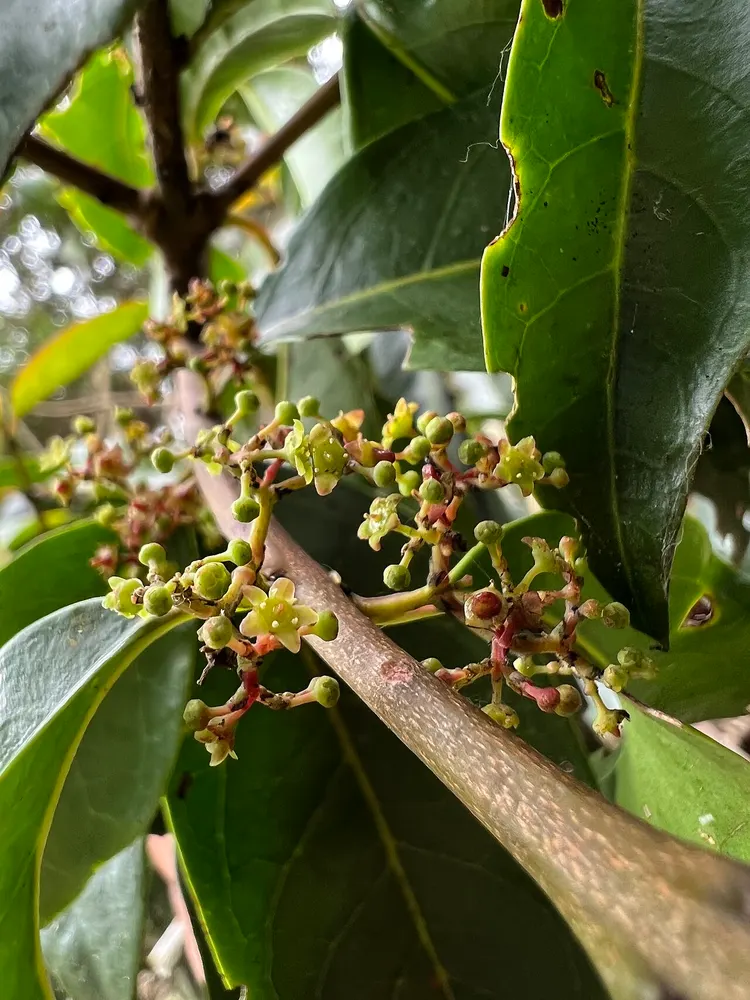
Photo: Nicolás Baresch Uribe, CC BY 4.0 (via Wikimedia Commons)
Southern Zinowiewia
Zinowiewia australis
Traditional uses
✦Zinowiewia australis does not carry a written history in the herbalist's cabinet. It belongs instead to the quieter story of the cloud forest canopy, one of about fourteen Zinowiewia species scattered from northeastern Mexico through Central America and the northern Andes down to Bolivia, with this particular species reaching an unusual southern outpost high in Venezuela's misted ridges and the isolated, tepui-fringed forests of Roraima in Brazil. Botanists have long found the whole Zinowiewia group difficult to sort out by leaf and flower alone, so this tree has spent more of its history being puzzled over under a hand lens than gathered for the table or the teapot. What value it holds is ecological rather than medicinal, as it takes its place quietly in the high forest alongside its more storied Celastraceae cousins.
How to grow & use it
✦The full apothecary for Southern Zinowiewia
Traditional remedies and step-by-step preparations, a complete growing guide, and how to harvest, dry, and store it, all unlocked with HerbLens Unlimited.
- ✦Remedies & preparations
- ✦ Growing guide
- ✦Harvest & storage
From under $6 a month. Free plant identifications always included.
“For the misted, hard-to-reach crown of a cloud forest, not for the medicine chest.”
The species name australis is simply Latin for 'southern,' and it fits: most Zinowiewia species cluster in the mountains of Mexico and Central America, but Zinowiewia australis pushes the genus surprisingly far south, with confirmed populations in the cloud forests of Venezuela and, remarkably, in the isolated tepui country of Roraima in northern Brazil.
This tree has no history of food, medicine, or tea use, and its safety has never been studied. Several relatives in its family are known to be toxic to people or livestock, and Zinowiewia species are hard to tell apart, so it should not be gathered, eaten, or brewed.