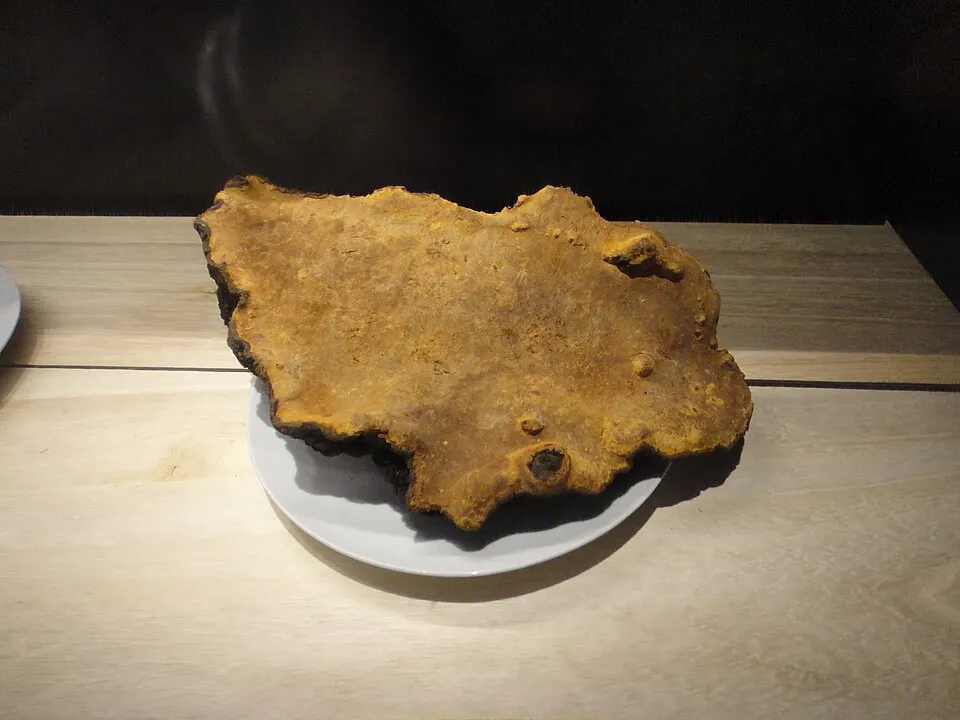
Photo: Koala0090, CC BY-SA 4.0 (via Wikimedia Commons)
Sanghuang Mushroom
Sanghuangporus sanghuang
Also known as Sang Huang, Mulberry Yellow Polypore, Yellow Mulberry Fungus, Bunun Fire Mushroom (Taiwan)
Key benefits
✦Traditional uses
✦Long before laboratories took an interest in its polysaccharides, Sanghuang was a slow, patient medicine gathered from the wounded bark of old mulberry trees. Its name literally means mulberry yellow in Chinese, a nod to both its favored host and the golden stain it leaves when simmered. Practitioners across China, Korea, Taiwan, and Japan traditionally prepared it as a decoction for digestive upset, diarrhea, and general depletion, while classical Chinese materia medica texts described it among the tonic fungi valued for supporting the liver and fortifying resistance through the seasons. In Taiwan, indigenous communities such as the Bunun and Tsou people traditionally climbed deep into old-growth forest to harvest it from ancient trees, treating it as a hard-won treasure rather than an everyday remedy.
How to grow & use it
✦The full apothecary for Sanghuang Mushroom
Traditional remedies and step-by-step preparations, a complete growing guide, and how to harvest, dry, and store it, all unlocked with HerbLens Unlimited.
- ✦Remedies & preparations
- ✦ Growing guide
- ✦Harvest & storage
From under $6 a month. Free plant identifications always included.
- ✦Reishi
- ✦Jujube (red date)
- ✦Goji berry
- ✦Chaga
- ✦Reishi
Because Sanghuang grows so slowly and often only on aged mulberry trees deep in remote mountain forest, wild specimens have historically fetched prices in Taiwan rivaling gold by weight, making it one of the most sought-after wild fungi in East Asian herbal tradition.
Sanghuang is best avoided during pregnancy and breastfeeding. Because it may affect blood sugar and immune activity, use caution if taking diabetes medication, immunosuppressants, or blood thinners, and only use fruiting bodies from a reliably identified source.