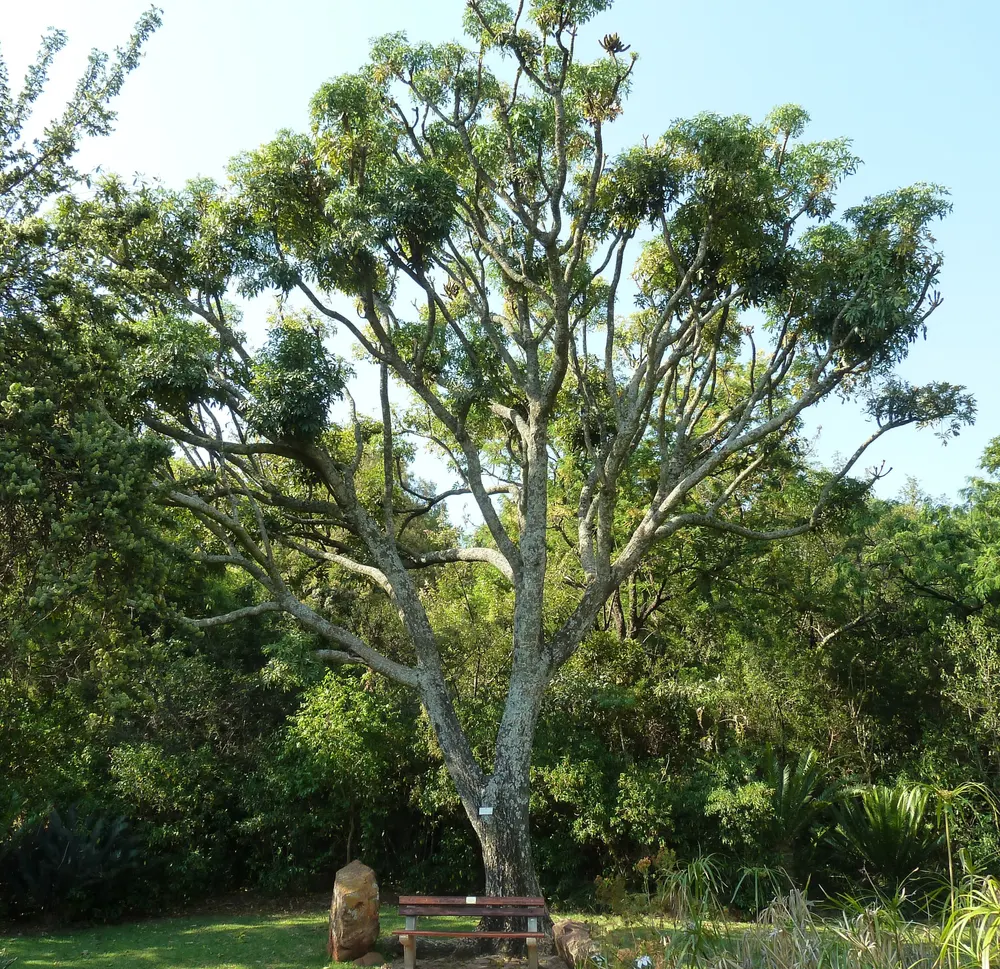
Photo: JMK, CC BY-SA 3.0 (via Wikimedia Commons)
Common Cabbage Tree
Cussonia spicata
Also known as Kiepersol, Lowveld Cabbage Tree, Common Cabbage Tree (umSenge in Zulu)
Key benefits
✦Traditional uses
✦In the traditional medicine of the Zulu and other southern African peoples, the corky bark and swollen roots of the common cabbage tree were simmered into decoctions taken for stomach upset, chest complaints, and general fever. Beyond the medicine chest, the tree carried a protective role too, often planted close to homesteads as a charm believed to guard the household and draw good fortune. This knowledge was passed down carefully through healers rather than written into common recipe books, which is part of why we present the tree here with reverence for its history rather than as a home remedy to try yourself.
How to grow & use it
✦The full apothecary for Common Cabbage Tree
Traditional remedies and step-by-step preparations, a complete growing guide, and how to harvest, dry, and store it, all unlocked with HerbLens Unlimited.
- ✦Remedies & preparations
- ✦ Growing guide
- ✦Harvest & storage
From under $6 a month. Free plant identifications always included.
“When you want a living sculpture with silver green, hand shaped leaves and centuries of quiet history rooted in southern African soil.”
The swollen, spongy roots that give cabbage trees their thick, sculptural shape store so much water that thirsty travelers in dry regions have traditionally tapped them in an emergency, one reason the genus Cussonia earned such devoted respect across its range.
The common cabbage tree's internal safety is not well studied, so it is best enjoyed as a garden tree rather than a home remedy. Stripping bark from a living tree can seriously harm it, so leave harvesting to experienced practitioners.