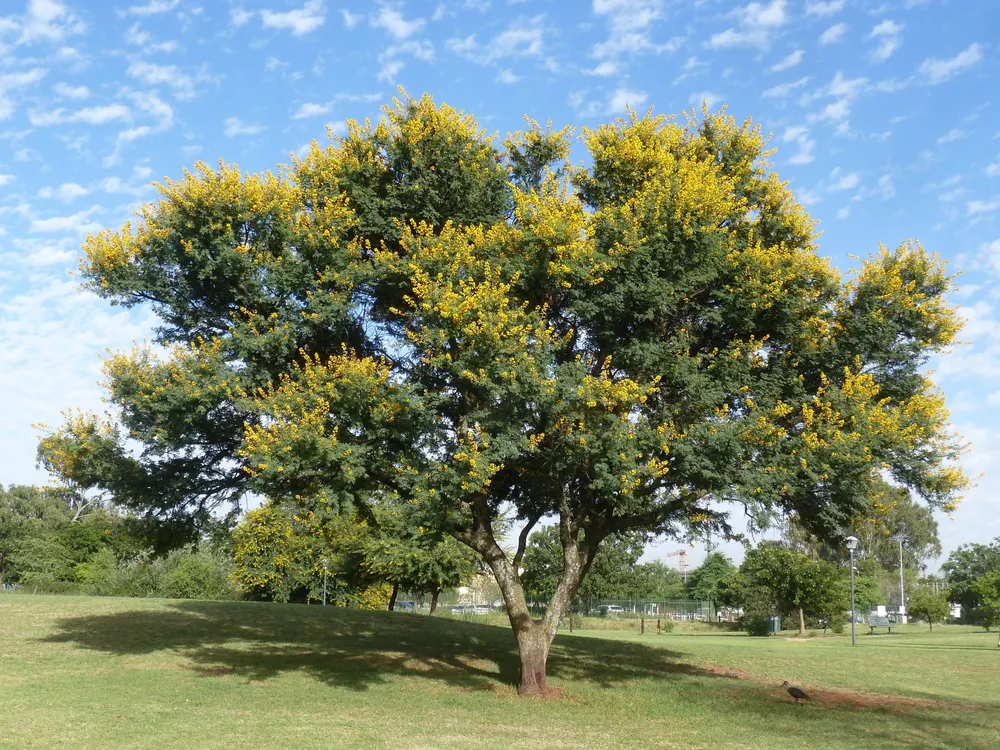
Photo: JMK, CC BY-SA 3.0 (via Wikimedia Commons)
Sweet Thorn
Acacia karroo
Also known as Karoo Thorn, Cape Gum, Mimosa Thorn, Doringboom
Key benefits
✦Traditional uses
✦Long before it had a Latin name, sweet thorn was one of the great utility trees of the southern African bush. Its amber gum, wept from cracks in the bark, was chewed and dissolved into water much the way gum arabic was used further north, soothing coughs and easing an unsettled stomach. Healers across many southern African communities have traditionally simmered the bark into a decoction for diarrhea and applied it to wounds, while the thorny branches themselves were laid across kraals and gaps in fences, a practical reminder that this tree has always done double duty as medicine chest and homestead guardian.
How to grow & use it
✦The full apothecary for Sweet Thorn
Traditional remedies and step-by-step preparations, a complete growing guide, and how to harvest, dry, and store it, all unlocked with HerbLens Unlimited.
- ✦Remedies & preparations
- ✦ Growing guide
- ✦Harvest & storage
From under $6 a month. Free plant identifications always included.
- ✦Ginger
- ✦Chamomile
- ✦Rooibos
- ✦Gum arabic (Acacia senegal)
- ✦Marshmallow root
“For the gold-flowered thorn tree that has shaded travelers and mended wounds across the African bush for generations.”
Sweet thorn is one of the few trees whose flat, umbrella-shaped elders you can spot from a distance across the African savanna, and giraffes have co-evolved with it so closely that they can browse its thorny branches with a tough, prehensile tongue built just for the job.
Sweet Thorn's gum, bark, and flowers show no significant toxicity, and the gum has traditionally been chewed like gum arabic. The tree's long, sharp thorns can cause puncture wounds prone to infection, so handle it with care.