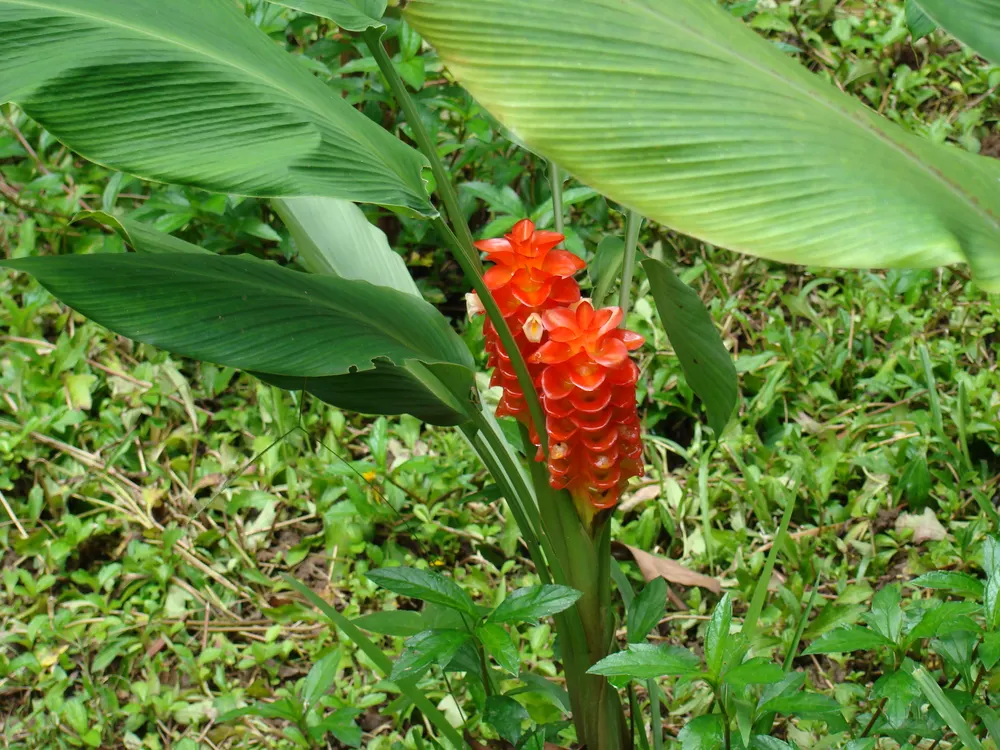
Photo: Meneerke bloem, CC BY-SA 3.0 (via Wikimedia Commons)
Jewel Ginger
Curcuma roscoeana
Also known as Pride of Burma, Golden Mace, Cone Ginger, Orange Ginger
Key benefits
✦Traditional uses
✦Curcuma roscoeana belongs to the same genus as culinary turmeric, but it has traveled a very different path through history. Rather than being dried and ground into a kitchen staple, it has been prized for centuries in its native Myanmar and across Southeast Asia purely for its beauty, planted along garden paths and temple grounds for the way its stacked, waxy bracts glow like little torches. Growers and florists later carried it around the tropical world as an ornamental and cut flower, and it remains a garden favorite today for exactly the reason it always was, its unmistakable color.
How to grow & use it
✦The full apothecary for Jewel Ginger
Traditional remedies and step-by-step preparations, a complete growing guide, and how to harvest, dry, and store it, all unlocked with HerbLens Unlimited.
- ✦Remedies & preparations
- ✦ Growing guide
- ✦Harvest & storage
From under $6 a month. Free plant identifications always included.
- ✦Heliconia
- ✦Calathea
- ✦Alpinia (shell ginger)
- ✦Curcuma alismatifolia (Siam tulip)
- ✦Zingiber spectabile (beehive ginger)
“Choose jewel ginger when a garden bed needs a little piece of the rainforest canopy set ablaze.”
What looks like one flamboyant flower is actually a stack of modified leaves called bracts. The true flowers are small and pale yellow, tucked shyly between the colorful bracts, a trick shared by nearly every plant in the ginger family.
Curcuma roscoeana has not been studied or documented as a food, spice, or medicine the way its famous cousin turmeric (Curcuma longa) has, so it should not be eaten or brewed. Like many gingers, its sap can cause mild skin irritation in sensitive people when the rhizome is cut or divided, so gardeners with sensitive skin may want to wear gloves during handling and repotting. Keep curious pets and small children from digging up and chewing the rhizomes. If you are drawn to the wider Curcuma family for wellness reasons, please seek out true turmeric and speak with a qualified healthcare professional before using it medicinally, especially if pregnant, nursing, or taking blood thinners or other medications.