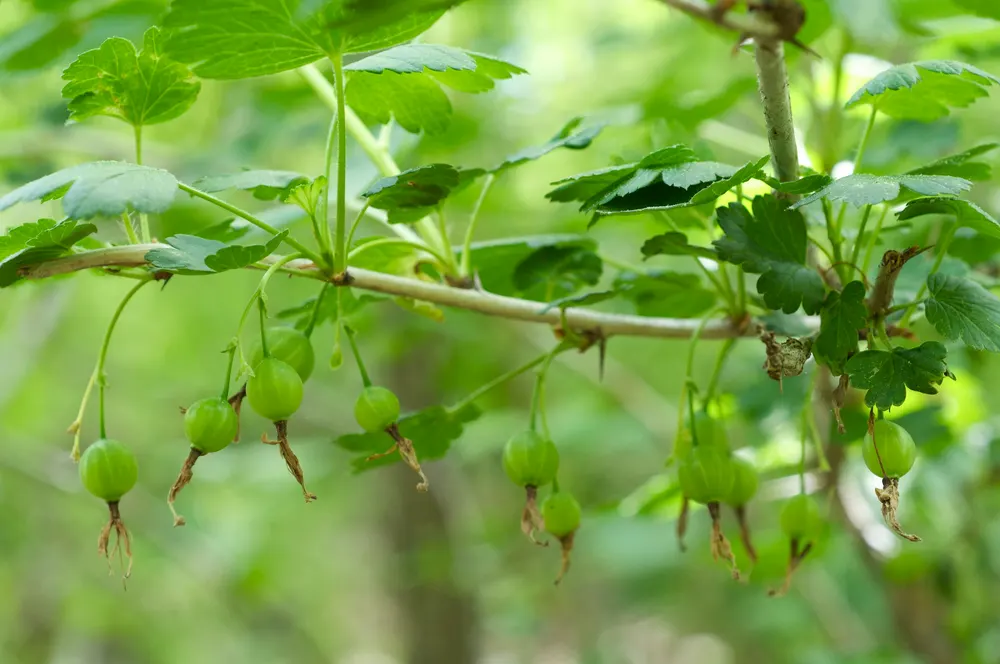
Photo: Eric in SF, CC BY-SA 3.0 (via Wikimedia Commons)
Missouri Gooseberry
Ribes missouriense
Also known as Wild Gooseberry, Missouri Currant, Ribes
Key benefits
✦Traditional uses
✦Long before orchard fruit was common on the prairie, foragers and homesteaders in the Midwest gathered Missouri gooseberry from thickets and fencerows each early summer. Its tart, jewel-toned berries were prized for pies, jams, and shrubs, offering a burst of vitamin C at a time of year when little else was ripe. Indigenous peoples of the region also gathered the wild berries as a seasonal food and dried some for later use, folding them into pemmican and other preserved foods. The leaves were occasionally steeped into a mild traditional tea, though the berry has always been the plant's real gift.
How to grow & use it
✦The full apothecary for Missouri Gooseberry
Traditional remedies and step-by-step preparations, a complete growing guide, and how to harvest, dry, and store it, all unlocked with HerbLens Unlimited.
- ✦Remedies & preparations
- ✦ Growing guide
- ✦Harvest & storage
From under $6 a month. Free plant identifications always included.
- ✦Elderberry
- ✦Rosehip
- ✦Wild mint
- ✦Currant
- ✦Cultivated gooseberry
“For the tart, sun-warmed taste of a fencerow harvest, gathered the old way.”
Missouri gooseberry canes carry small spines near the leaf nodes, a trait early settlers used to identify the plant in a thicket long before the berries ripened, since the thorns appear well ahead of the fruit each spring.
Missouri gooseberry's ripe fruit is safe to eat fresh or cooked; the leaves and stems are tougher to digest and aren't typically eaten.