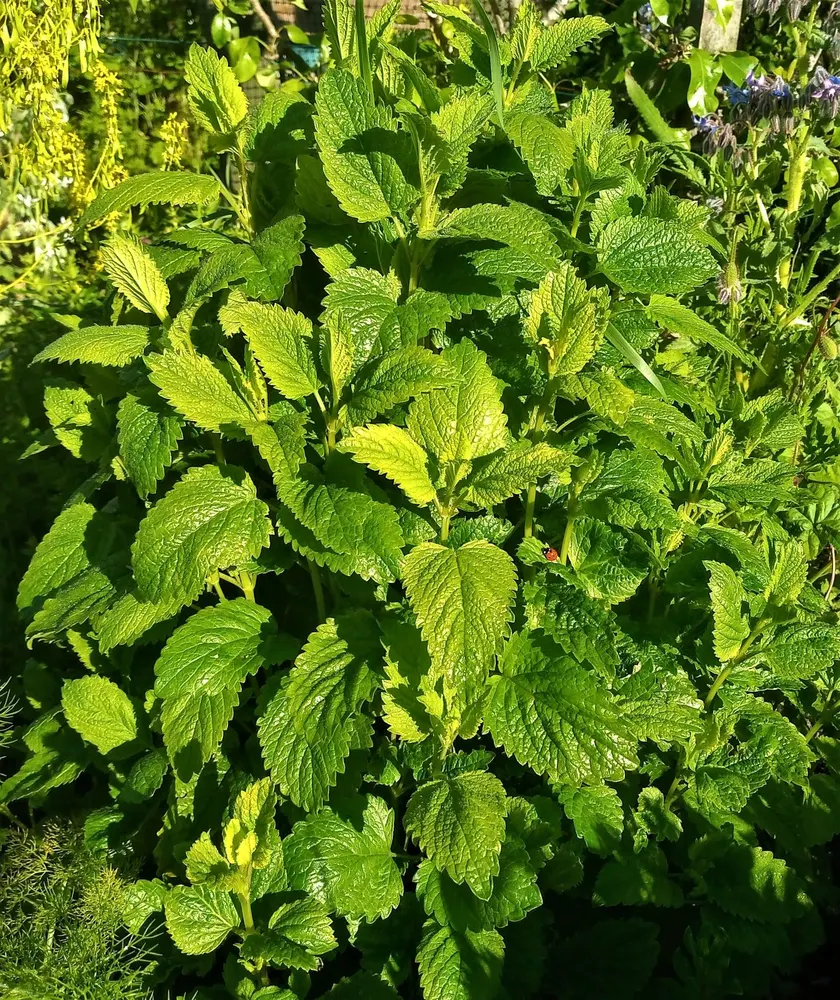
Photo: Amitchell125, CC BY-SA 4.0 (via Wikimedia Commons)
Lemon Balm
Melissa officinalis
Also known as Balm, Sweet Balm, Bee Balm, Melissa
Key benefits
✦Traditional uses
✦Lemon balm has been steeped into calming teas since at least the days of ancient Greece, where it was tucked into wine and honey to lift low spirits. Medieval monks grew it in cloister gardens and called it the 'gladdening herb,' brewing it for anything from a racing heart to a troubled mind. Traditional European herbalism has long turned to lemon balm for jangled nerves, restless sleep, and a fussy digestion after a heavy meal, while folk healers also dabbed the bruised leaf on insect bites and skin irritations. It found its way into Carmelite Water, a famous 17th century French tonic distilled by nuns to ease anxious hearts and headaches.
How to grow & use it
✦The full apothecary for Lemon Balm
Traditional remedies and step-by-step preparations, a complete growing guide, and how to harvest, dry, and store it, all unlocked with HerbLens Unlimited.
- ✦Remedies & preparations
- ✦ Growing guide
- ✦Harvest & storage
From under $6 a month. Free plant identifications always included.
- ✦Chamomile
- ✦Lavender
- ✦Passionflower
- ✦Spearmint
- ✦Lemon verbena
“For the evening the day finally exhales, and you want your tea to do the same.”
The name Melissa comes from the Greek word for honeybee. Beekeepers have rubbed lemon balm leaves inside empty hives for centuries, believing the lemony scent would coax a swarm to move in and stay put.
Lemon balm is generally gentle but can cause drowsiness and may strengthen the effect of sedatives, sleep medications, or thyroid medications. Safety in pregnancy and breastfeeding is not well established, so it is best avoided then.