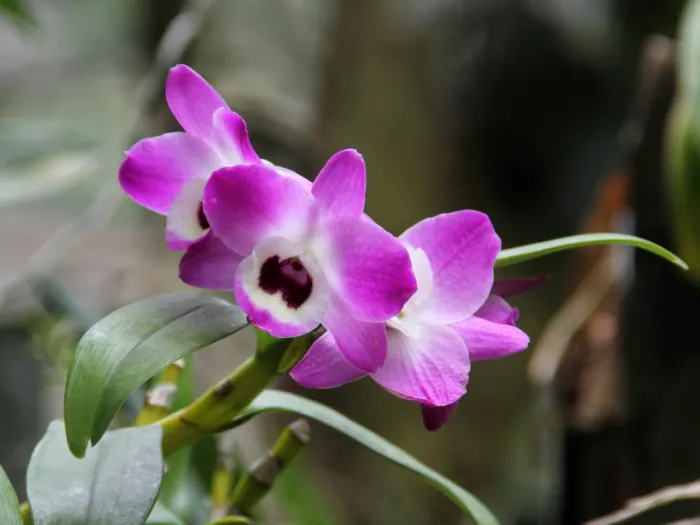
Photo: Fan Wen, CC BY-SA 4.0 (via Wikimedia Commons)
Noble Dendrobium
Dendrobium nobile
Also known as Shi Hu, Noble Rock Orchid, Herba Dendrobii, Feng Dou Shi Hu
Key benefits
✦Traditional uses
✦In Traditional Chinese Medicine, the dried stems of Dendrobium nobile, known as shi hu, have been simmered into tonics for well over a thousand years to cool fever, replenish the body's fluids, and ease the parched mouth and throat that often follow a long illness. It is counted among the treasured nine immortal herbs of Chinese herbal lore, once so prized that harvesters climbed cliff faces and old forest trees just to gather the wild canes clinging to bark and stone. Healers reached for it to comfort a weary stomach after fever, to brighten tired eyes, and to restore a sense of moisture and vitality to a body left feeling dried out and depleted.
How to grow & use it
✦The full apothecary for Noble Dendrobium
Traditional remedies and step-by-step preparations, a complete growing guide, and how to harvest, dry, and store it, all unlocked with HerbLens Unlimited.
- ✦Remedies & preparations
- ✦ Growing guide
- ✦Harvest & storage
From under $6 a month. Free plant identifications always included.
- ✦Goji berry (wolfberry)
- ✦American ginseng
- ✦Chrysanthemum flower
- ✦Dendrobium officinale
- ✦American ginseng
“For the parched, weary days when your throat feels dry and your reserves feel thin.”
The name Dendrobium comes from the Greek dendron, meaning tree, and bios, meaning life, a nod to a plant that spends its whole existence perched on bark rather than rooted in soil.
Dendrobium nobile contains alkaloids that may interact with diabetes or blood pressure medication, and its safety in pregnancy and breastfeeding isn't established. Wild populations are heavily overharvested, so choose cultivated stems rather than wild-collected ones.