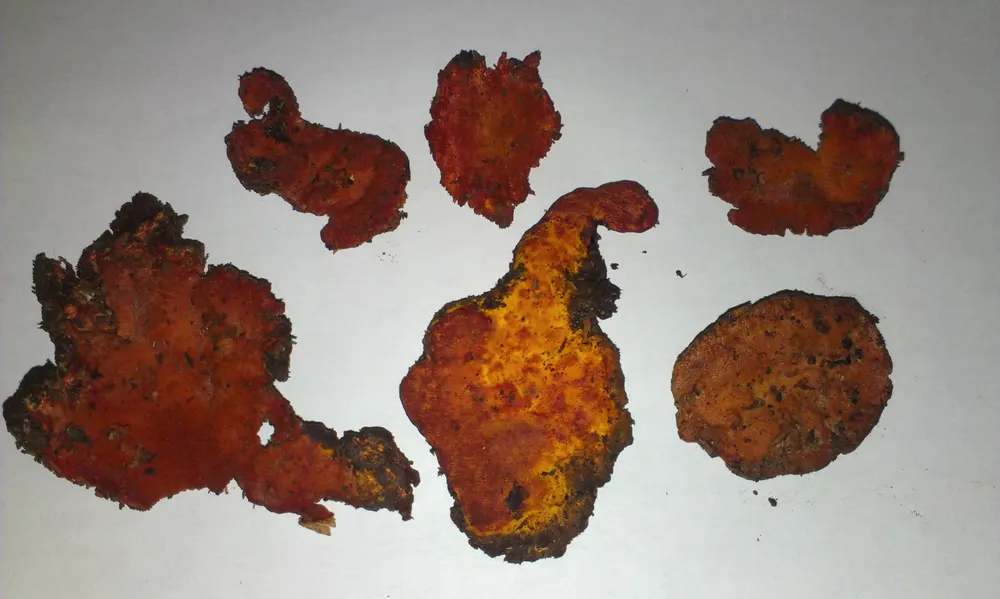
Photo: Thomaswz19, CC BY-SA 3.0 (via Wikimedia Commons)
Antrodia (Niu Chang Chih / Taiwan Camphor Fungus)
Antrodia camphorata
Also known as Niu Chang Chih, Chang Chih, Taiwan Camphor Fungus, Taiwanofungus camphoratus, Ganoderma camphoratum
Key benefits
✦Traditional uses
✦In Taiwan, Antrodia camphorata, known locally as niu chang chih or chang chih, has been treasured for generations as a folk remedy for liver complaints, stomach upset, and general vitality, first noticed by indigenous hunters who found it fruiting only inside the hollows of the sacred camphor tree. Long before laboratories took interest, mountain communities simmered slices of the rare, woody fruiting body into deep amber decoctions to soothe the stomach and aid recovery after illness or overindulgence. Because genuine wild specimens were so scarce, hidden deep in remote forests and found on a single host species, it became one of the most expensive fungi in Taiwanese herbal medicine, at times trading for more than its weight in gold. Today it remains a cornerstone of Taiwanese tonic traditions, though cultivation on camphor wood and through fermentation has made it far more accessible than the wild original ever was.
Growing guide
✦Fresh to dried
✦Traditional preparations
✦Traditional Camphor Fungus Decoction
The classic long-simmered preparation used in Taiwanese folk practice to make this dense, woody fungus into a drinkable tonic.
How it's made. Traditionally, 3 to 5 grams of dried sliced fruiting body are simmered gently in 500 ml of water for 20 to 30 minutes, then strained and sipped warm.
- ✦Reishi (Ganoderma lucidum)
- ✦Milk thistle
- ✦Schisandra berry
- ✦Reishi (Ganoderma lucidum)
- ✦Turkey tail (Trametes versicolor)
“For the deep amber decoction of old Taiwanese mountain villages, brewed slowly and sipped to ease a tired liver after a hard day.”
Antrodia camphorata grows on exactly one host in the entire world, the endangered Taiwanese camphor tree Cinnamomum kanehirae, which is itself found nowhere outside Taiwan. That double rarity once made genuine wild specimens so valuable that they were traded on the black market for prices rivaling gold by weight.
This is a potent traditional fungal medicine, not a casual herb, and heavy or prolonged use of concentrated extracts has been linked in rare cases to liver strain. It may also affect blood clotting, so use caution with blood-thinning, antiplatelet, or immunosuppressant medication, and it's best avoided during pregnancy and breastfeeding. Look for responsibly cultivated sources, since wild stock is rare and protected.