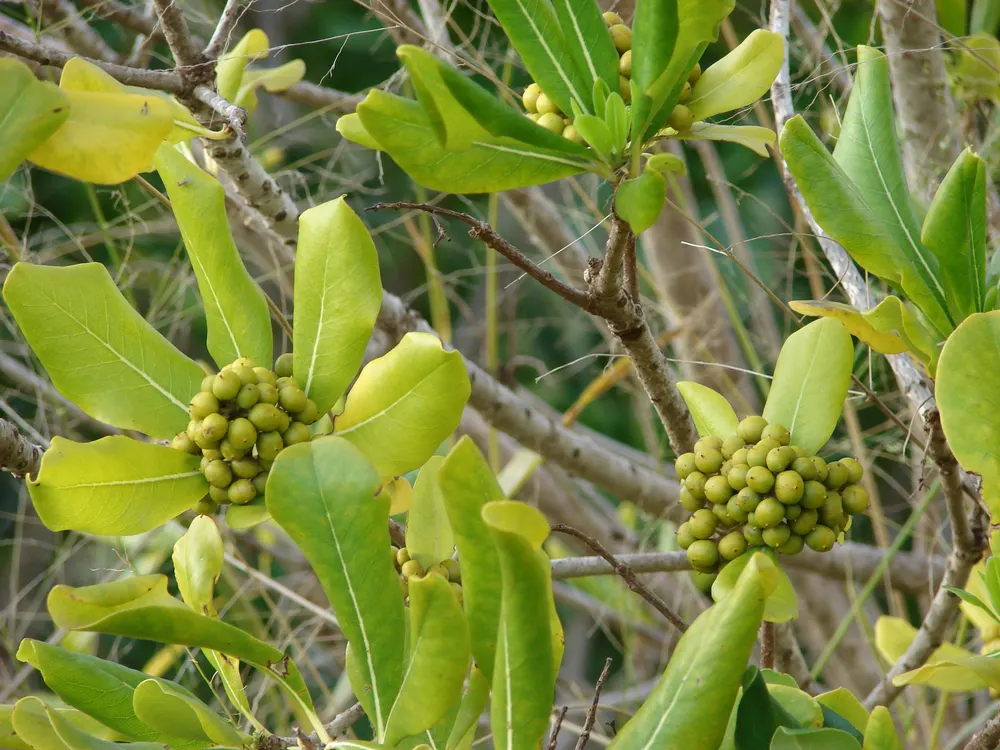
Photo: Forest & Kim Starr, CC BY 3.0 (via Wikimedia Commons)
Cheesewood
Pittosporum viridiflorum
Also known as Cape Cheesewood, White Cheesewood, Kasuur
Key benefits
✦Traditional uses
✦Long before it found its way into ornamental gardens, cheesewood held a steady place in the traditional medicine of southern Africa, where healers turned to its bark and leaves for fevers, chest complaints, and stubborn colds. The bark, stripped in strips from older branches, was simmered into decoctions used as a general tonic and wash for wounds. It earned its common name from the pale, close-grained timber beneath the bark, which early settlers found cut cleanly and evenly, almost like a wheel of cheese, and prized for tool handles and yokes. Today the tree is better known as a hardy, glossy-leaved addition to gardens and hedgerows, its old reputation as a healing bark now mostly a quiet footnote in ethnobotanical records.
How to grow & use it
✦The full apothecary for Cheesewood
Traditional remedies and step-by-step preparations, a complete growing guide, and how to harvest, dry, and store it, all unlocked with HerbLens Unlimited.
- ✦Remedies & preparations
- ✦ Growing guide
- ✦Harvest & storage
From under $6 a month. Free plant identifications always included.
- ✦Rooibos
- ✦Wild Ginger
- ✦African Wormwood
- ✦Cape Chestnut bark
- ✦Wild Pear bark
“For a hardy old healing tree with more history in the bark than in the modern kitchen.”
Cheesewood's name has nothing to do with flavor. Early settlers in South Africa noticed that its pale, dense wood sliced as cleanly and smoothly under a blade as a block of cheese, and the name stuck long before anyone thought to write it into a field guide.
Cheesewood hasn't been well studied and lacks reliable safety information for internal use, so it's best avoided as a home remedy, especially during pregnancy or by children.