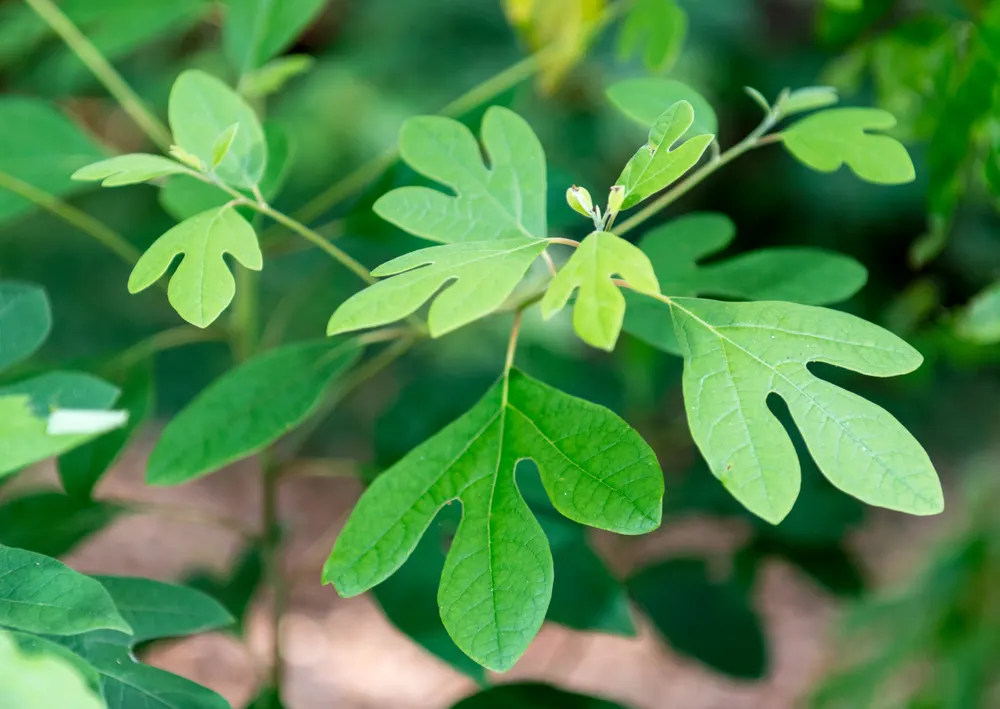
Photo: Randy Everette, CC BY-SA 3.0 (via Wikimedia Commons)
Sassafras
Sassafras albidum
Also known as Sassafras Tree, White Sassafras, Cinnamon Wood, Ague Tree, Filé Tree
Key benefits
✦Traditional uses
✦Long before it flavored root beer, sassafras grew at the center of a whole colonial economy. Indigenous peoples across the Southeast and mid-Atlantic used the root, bark, and pith in folk remedies for fevers, colds, and skin complaints, and taught early European settlers to do the same. By the 1600s, sassafras root was one of the first American exports shipped back to England, prized as a cure-all and a fragrant curiosity. Its most enduring legacy today is culinary rather than medicinal, the dried, ground young leaves became filé powder, the thickener and seasoning at the heart of Louisiana Creole and Cajun gumbo.
How to grow & use it
✦The full apothecary for Sassafras
Traditional remedies and step-by-step preparations, a complete growing guide, and how to harvest, dry, and store it, all unlocked with HerbLens Unlimited.
- ✦Remedies & preparations
- ✦ Growing guide
- ✦Harvest & storage
From under $6 a month. Free plant identifications always included.
- ✦Bay leaf
- ✦Thyme
- ✦Okra
- ✦Okra (as a gumbo thickener)
“For the tree that colored colonial ships' holds and still turns a woodland edge gold, orange, and scarlet every autumn.”
Sassafras root bark once flavored nearly every bottle of root beer in America, until the FDA banned safrole, its principal aromatic compound, from food and drink in 1960 after studies linked it to liver tumors in animals. Today's root beer flavor comes from safrole free substitutes, and true sassafras tea has largely vanished from kitchen cabinets for the same reason.
Sassafras root bark and the essential oil distilled from it are rich in safrole, a compound the U.S. FDA banned as a food and beverage additive in 1960 after research linked it to liver damage and liver cancer in animal studies; it is also classified as a possible human carcinogen. Historically, concentrated sassafras oil and strong root teas were used as folk abortifacients and can cause vomiting, liver injury, and in extreme doses death, so ingestion of the root, bark, or oil is not considered safe today and should be avoided entirely, especially during pregnancy and breastfeeding or with any liver condition. The dried leaf used as filé powder in cooking contains far less safrole than the root bark and is the traditional culinary form still used in small seasoning amounts, but it is not a substitute for medicinal use of the root. Talk with a qualified healthcare provider or herbalist before using any part of this plant beyond its established culinary role.