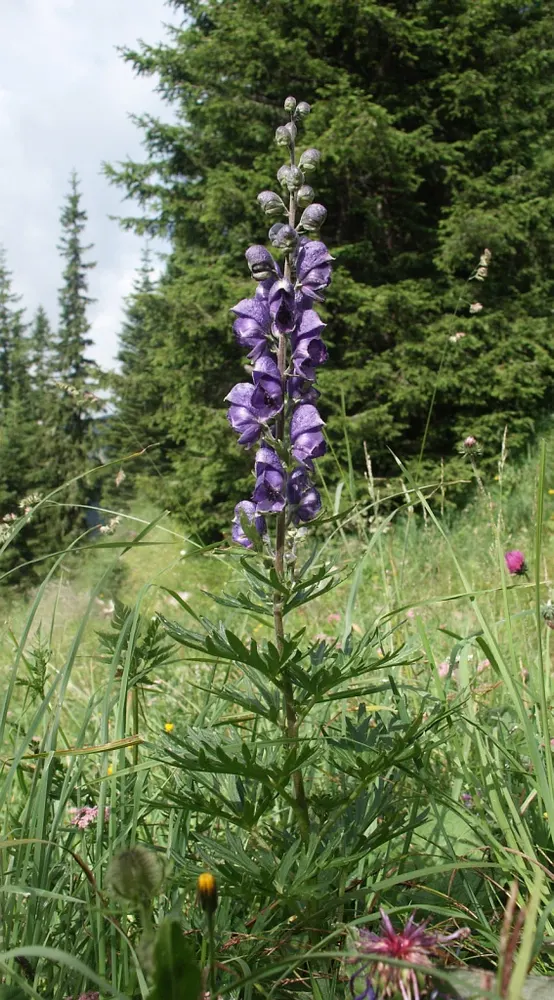
Photo: Bernd Haynold, CC BY-SA 2.5 (via Wikimedia Commons)
Monkshood
Aconitum napellus
Also known as Wolfsbane, Aconite, Devil's Helmet, Blue Rocket, Queen of Poisons
Key benefits
✦Traditional uses
✦Monkshood carries one of the most storied and sobering reputations in the plant world. In classical Europe it was gathered to tip hunting arrows and wolf bait, which is how it earned the name wolfsbane, and old herbals from Dioscorides onward warned readers away from it in the same breath they described it. In traditional Chinese medicine, a specially processed and detoxified form of the root, called fu zi, has long been prepared by trained practitioners for warming and pain-easing formulas, but the process is exacting and never something attempted at home. In Western folk herbalism, tinctures made in whisper-small, carefully measured doses were once used by experienced professionals for nerve pain and fever, a practice now almost entirely set aside in favor of safer options.
How to grow & use it
✦The full apothecary for Monkshood
Traditional remedies and step-by-step preparations, a complete growing guide, and how to harvest, dry, and store it, all unlocked with HerbLens Unlimited.
- ✦Remedies & preparations
- ✦ Growing guide
- ✦Harvest & storage
From under $6 a month. Free plant identifications always included.
- ✦Astilbe
- ✦Ferns
- ✦Hosta
- ✦Willow bark
- ✦Devil's claw
“A plant to admire from the far side of the flowerbed, never from the kitchen.”
In Greek myth, monkshood was said to have sprung from the drool of Cerberus, the three-headed hound of the underworld, as Hercules dragged him into daylight, which is likely why the ancients treated the plant as something born of the darkest places.
Aconitum napellus is one of the most toxic plants in the temperate world. Every part of the living plant contains aconitine and related alkaloids that can cause numbness, nausea, dangerous heart rhythms, paralysis, and death, and poisoning has occurred simply from handling the roots or leaves with bare hands, especially through cuts in the skin. There is no home preparation, dose, or tea that is safe. It should never be ingested in any form, and gardeners should wear gloves and wash thoroughly after any contact. Keep it well out of reach of children, pets, and grazing animals, and away from anything meant for the kitchen. If you are drawn to its traditional uses in pain relief or Chinese medicine formulas, that work belongs solely in the hands of a licensed physician or qualified herbal practitioner trained in its specialized processing, never at home.