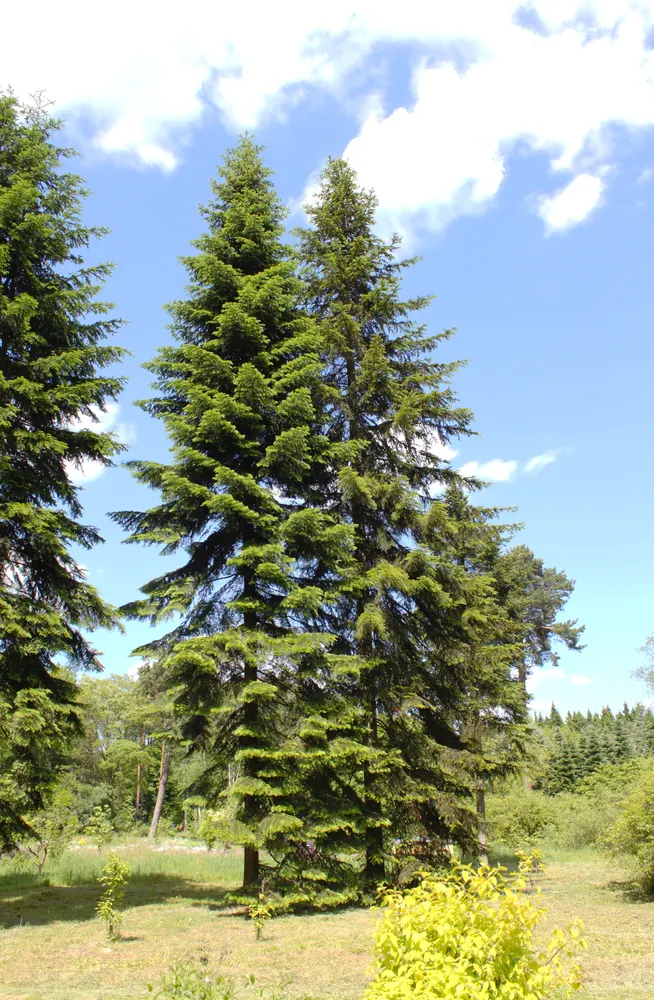
Photo: Crusier, CC BY-SA 3.0 (via Wikimedia Commons)
Siberian Fir
Abies sibirica
Also known as Siberian Silver Fir, Pihta
Key benefits
✦Traditional uses
✦For centuries, Siberian and northern Russian communities turned to this hardy fir when winter closed in, brewing its needles into a vitamin-rich tea to help ward off scurvy through months without fresh produce. Fresh branches were traditionally laid across banya benches so their steam and scent filled the bathhouse, and the resin and needle-derived oil were rubbed on tired muscles and sore joints after long days in the cold. Long before it became a familiar note in modern aromatherapy, Siberian fir was simply the forest's medicine chest, close at hand through the harshest season.
How to grow & use it
✦The full apothecary for Siberian Fir
Traditional remedies and step-by-step preparations, a complete growing guide, and how to harvest, dry, and store it, all unlocked with HerbLens Unlimited.
- ✦Remedies & preparations
- ✦ Growing guide
- ✦Harvest & storage
From under $6 a month. Free plant identifications always included.
- ✦Pine
- ✦Eucalyptus
- ✦Thyme
- ✦Spruce needles
- ✦Pine needles
“When winter presses close and you long for the green, resinous hush of a snowbound forest.”
Fresh Siberian fir needles carry more vitamin C, ounce for ounce, than many citrus fruits. Siberian villagers traditionally brewed the needles into a bracing winter tea to help guard against scurvy during the long, sunless months, and bundles of the fragrant branches were laid across banya benches so the steam would carry their scent through the bathhouse.
Siberian fir essential oil is for topical or aromatic use only and should never be taken internally, as it can irritate the mouth and digestive tract. Always dilute it in a carrier oil before applying to skin, since it can irritate or trigger an allergic reaction, particularly in those with asthma or fragrance sensitivities.