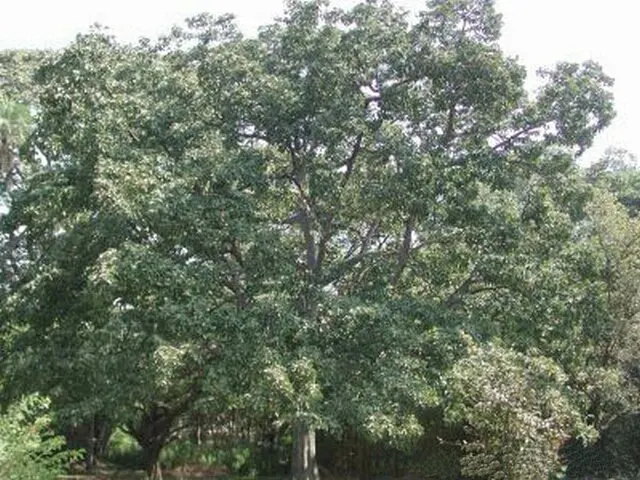
Photo: Jan Ainali, CC BY-SA 3.0 (via Wikimedia Commons)
Beleric (Bibhitaki)
Terminalia bellirica
Also known as Bibhitaki, Baheda, Bastard Myrobalan, Beddha Nut
Key benefits
✦Traditional uses
✦Bibhitaki has held a place of honor in Ayurvedic medicine for thousands of years, prized as one of the three fruits that make up Triphala, a formula still turned to today for gentle daily support. Traditional healers across India used the fruit for coughs, hoarseness, and digestive complaints, and it was also valued in folk practice for the hair and eyes. Its very name in Sanskrit speaks to the confidence traditional practitioners placed in it, and generations of households kept the dried fruit on hand as a humble, everyday remedy.
How to grow & use it
✦The full apothecary for Beleric (Bibhitaki)
Traditional remedies and step-by-step preparations, a complete growing guide, and how to harvest, dry, and store it, all unlocked with HerbLens Unlimited.
- ✦Remedies & preparations
- ✦ Growing guide
- ✦Harvest & storage
From under $6 a month. Free plant identifications always included.
- ✦Amla (Indian gooseberry)
- ✦Haritaki
- ✦Licorice root
- ✦Haritaki
- ✦Amla
“For the cough that lingers past its welcome, and a digestion that could use a steadying hand.”
Bibhitaki is one of the three fruits in Triphala, the beloved Ayurvedic formula whose name simply means "three fruits." Village elders in India have long said elephants seek out the ripe fruit as it falls, and the tree's Sanskrit name is sometimes translated as "one who conquers disease," a nod to the reverence it has held in traditional medicine for centuries.
Bibhitaki's tannins can cause digestive upset or constipation in large amounts and may reduce absorption of iron and other minerals. It may interact with diabetes or blood-thinning medications, and it's best avoided during pregnancy and breastfeeding since safety data is lacking.