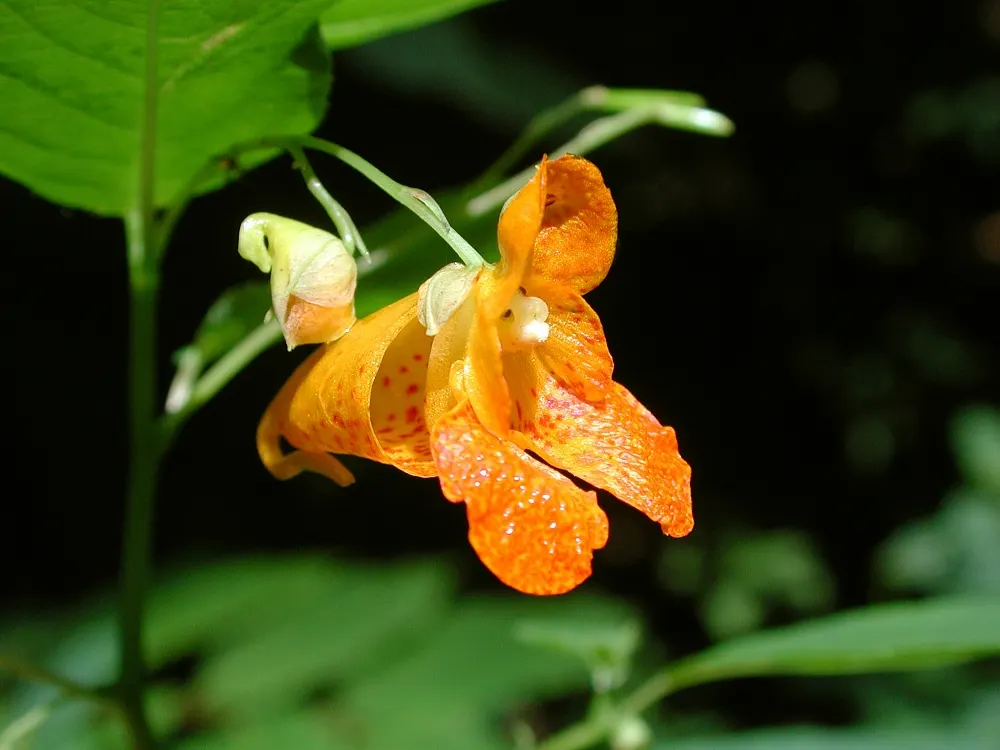
Photo: Fritz Geller-Grimm, CC BY-SA 2.5 (via Wikimedia Commons)
Jewelweed
Impatiens capensis
Also known as Spotted Touch-Me-Not, Orange Balsam, Wild Balsam, Snapweed
Key benefits
✦Traditional uses
✦Jewelweed has traditionally been used by many Native American nations, including the Cherokee, Iroquois, and Potawatomi, as a topical wash for poison ivy rash, stinging nettle contact, and other skin irritations. Generations of foragers have noticed that it tends to grow right alongside poison ivy in damp woods, and passed along the practical habit of crushing its cool, juicy stems on the spot for quick relief. Settlers adopted the plant from Native herbal knowledge, and it remains one of the most trusted trailside remedies in American folk tradition. Its watery, almost translucent stem is the part prized most, since that is where the soothing juice lives.
How to grow & use it
✦The full apothecary for Jewelweed
Traditional remedies and step-by-step preparations, a complete growing guide, and how to harvest, dry, and store it, all unlocked with HerbLens Unlimited.
- ✦Remedies & preparations
- ✦ Growing guide
- ✦Harvest & storage
From under $6 a month. Free plant identifications always included.
- ✦Plantain
- ✦Witch hazel
- ✦Calendula
- ✦Plantain leaf
- ✦Witch hazel
“For the itch that follows a careless step off the trail, and the plant that so often grows close enough to help.”
Jewelweed earns its common name from the way morning dew beads up into perfect, shimmering droplets on its waxy leaves, and its ripe seed pods burst open at the lightest touch, flinging seeds several feet, which is why it is also called touch-me-not.
Used topically only; the fresh juice is generally gentle on skin, though a small patch test is wise since a few people report mild sensitivity.