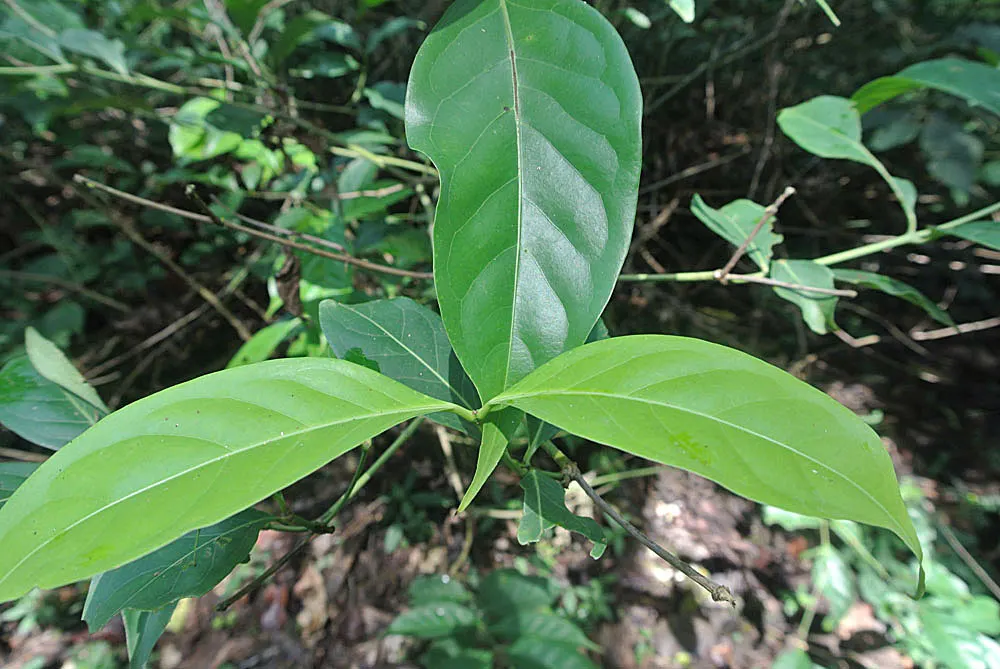
Photo: Dick Culbert from Gibsons, B.C., Canada, CC BY 2.0 (via Wikimedia Commons)
Chaliponga
Diplopterys cabrerana
Also known as Chagropanga, Chacruna negra, Oco-yagé, Banisteriopsis rusbyana (older synonym)
Traditional uses
✦Among Indigenous peoples of the western Amazon, including Shuar, Achuar, and other groups of Ecuador and Peru, the leaves of this forest vine have long been added to ayahuasca brews as a way of intensifying and coloring the visionary experience of the ceremony. It was never used as a household remedy or kitchen herb. Its place has always been within the careful hands of trained ceremonial practitioners, wrapped in ritual, fasting, and community protocol built up over many generations. The plant is respected in these cultures precisely because of its power, not despite it.
How to grow & use it
✦The full apothecary for Chaliponga
Traditional remedies and step-by-step preparations, a complete growing guide, and how to harvest, dry, and store it, all unlocked with HerbLens Unlimited.
- ✦Remedies & preparations
- ✦ Growing guide
- ✦Harvest & storage
From under $6 a month. Free plant identifications always included.
“A plant to know and respect from a careful distance, never to gather or brew at home.”
The leaves of this vine are one of the few plants in the world confirmed to contain N,N-DMT alongside 5-MeO-DMT in the same tissue, a rare combination that has made it of particular interest to ethnobotanists studying traditional Amazonian plant knowledge.
Diplopterys cabrerana contains N,N-dimethyltryptamine (DMT) and 5-MeO-DMT, powerful psychoactive tryptamines. In most countries, including the United States, DMT is a Schedule I controlled substance, and possessing, brewing, or ingesting this plant or preparations made from it is illegal outside of narrowly recognized religious or research exemptions. Ingestion can cause intense hallucinations, unpredictable psychological effects, and dangerous interactions with antidepressants (especially MAOIs and SSRIs), stimulants, and other serotonergic substances, with risk of serotonin syndrome. It should never be combined with other medications without qualified medical and legal guidance, should not be used by anyone with a personal or family history of psychosis, heart conditions, or during pregnancy, and should never be self-administered outside of a legally sanctioned, professionally supervised context. This entry is provided for botanical and historical reference only. Please consult a qualified healthcare provider and legal counsel in your jurisdiction before considering any interaction with this plant.