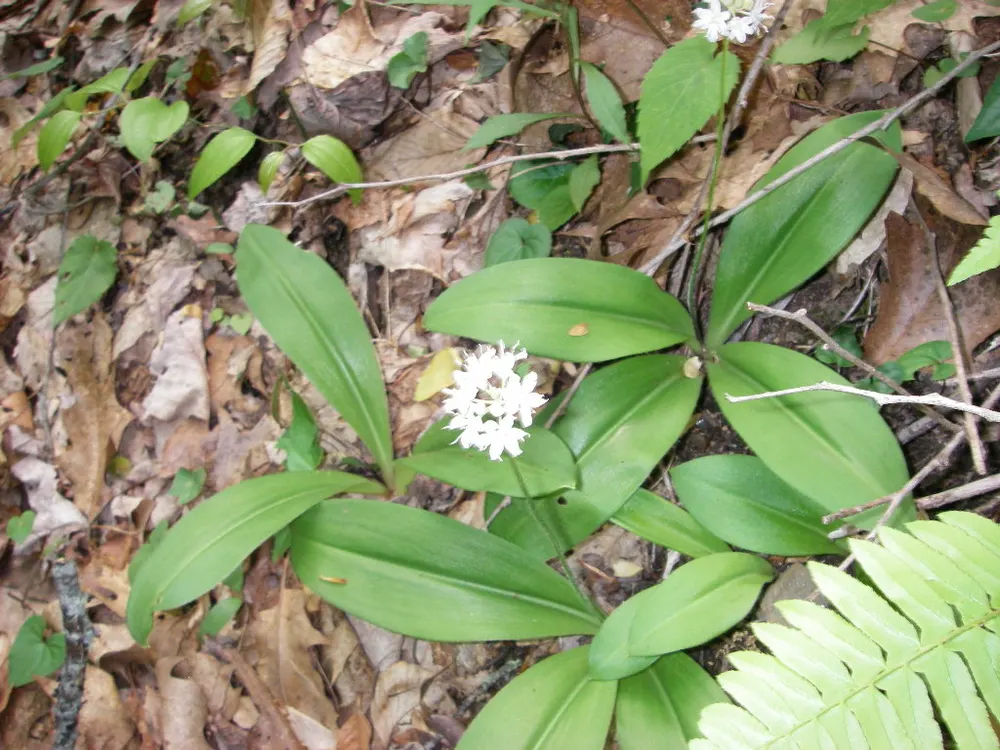
Photo: The original uploader was Halpaugh at English Wikipedia., CC BY-SA 3.0 (via Wikimedia Commons)
Speckled Wood Lily
Clintonia umbellulata
Also known as White Clintonia, White Bead Lily, Speckled Beadlily, Straw Lily
Key benefits
✦Traditional uses
✦Clintonia umbellulata is a quiet presence in the deep hardwood forests of the Appalachians and the Northeast, the kind of plant a wildflower walker learns to look for rather than one that made its way into the medicine chest. Its cousin, Clintonia borealis, with its bright blue berries, carries a well recorded history among Northeastern Native communities as a wound remedy, but umbellulata's black, speckled berries and any traditional applications specific to this species were simply never set down clearly in the historical record that survives. What has endured instead is its reputation among botanists and naturalists as a marker of old, undisturbed woodland, a small white constellation that only shows up where the forest floor has been left alone for a very long time. It is a plant to know by sight and to let be.
How to grow & use it
✦The full apothecary for Speckled Wood Lily
Traditional remedies and step-by-step preparations, a complete growing guide, and how to harvest, dry, and store it, all unlocked with HerbLens Unlimited.
- ✦Remedies & preparations
- ✦ Growing guide
- ✦Harvest & storage
From under $6 a month. Free plant identifications always included.
- ✦Wild ginger
- ✦Foamflower
- ✦Canada mayflower
- ✦Clintonia borealis (bluebead lily), a close relative for a similar woodland look
- ✦Maianthemum canadense, for a comparable native shade groundcover
“For the hush of old, undisturbed woods, and the small white stars that bloom there each spring.”
The genus Clintonia honors DeWitt Clinton, the early nineteenth century New York governor and naturalist, and botanists still treat this little lily as something of a living gauge of forest health, since it tends to appear only in rich, long-undisturbed woods rather than in land that has been logged or cleared more recently.
Not eaten; its berries are considered inedible, and related Clintonia species have caused stomach upset when eaten.