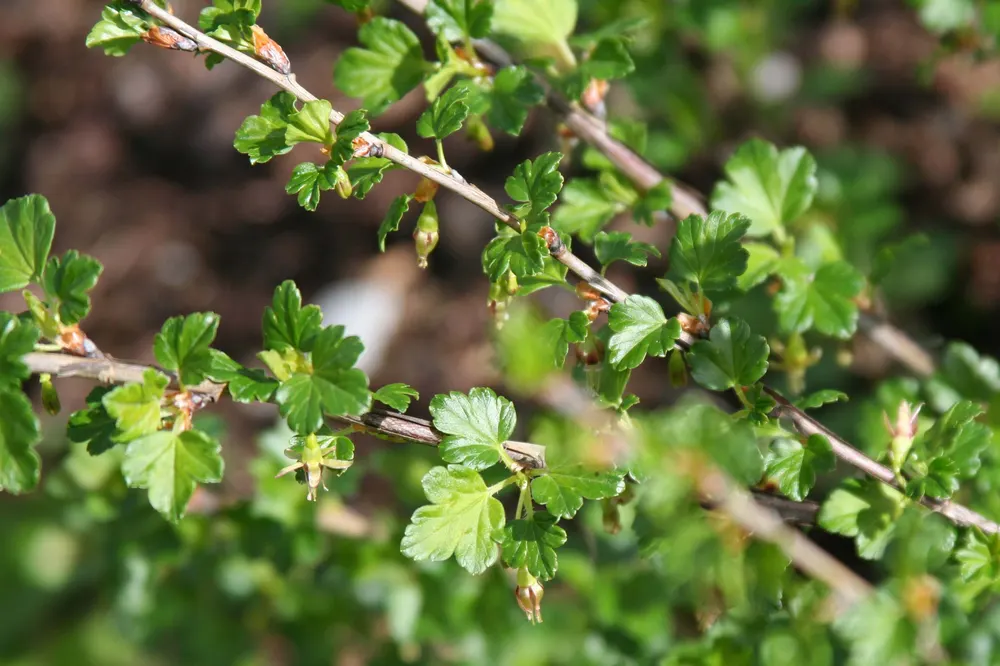
Photo: Image taken by Danny Dalton on 4/2/2007., Public domain (via Wikimedia Commons)
Roundleaf Gooseberry
Ribes rotundifolium
Also known as Appalachian Gooseberry, Mountain Gooseberry, Round-leaved Gooseberry
Key benefits
✦Traditional uses
✦Roundleaf gooseberry is a quiet native of the high Appalachian slopes, tucked into rocky crevices where few other fruiting shrubs bother to grow. Mountain families who came across its small, dusky purple berries in midsummer picked them for pies, jams, and vinegary shrubs, the same way their neighbors treated the more famous European gooseberry. It never became a cultivated crop the way its cousins the currants and blackcurrants did, and that is part of its charm. It remains a forager's find, a small reward for anyone willing to climb into thin, stony soil to look for it. Because so little formal ethnobotanical record survives for this particular species, its story today lives mostly in the hands of foragers and native plant gardeners who keep it going.
How to grow & use it
✦The full apothecary for Roundleaf Gooseberry
Traditional remedies and step-by-step preparations, a complete growing guide, and how to harvest, dry, and store it, all unlocked with HerbLens Unlimited.
- ✦Remedies & preparations
- ✦ Growing guide
- ✦Harvest & storage
From under $6 a month. Free plant identifications always included.
- ✦Wild blackberry
- ✦Elderberry
- ✦Wild ginger (as a woodland garden companion)
- ✦European gooseberry (Ribes uva-crispa)
- ✦Red currant
“For the forager who loves a slope, a scramble, and a small tart reward at the top of it.”
Ribes shrubs like this one were once outlawed across much of the United States. In the early 1900s, federal and state governments banned or restricted planting currants and gooseberries because the genus can host white pine blister rust, a fungus devastating to timber-valuable white pines. Some of those old restrictions still linger in state nursery regulations today.
Roundleaf gooseberry's ripe berries carry no significant toxicity, though unripe ones are very tart. It can host white pine blister rust, so some regions restrict planting it near susceptible pines.