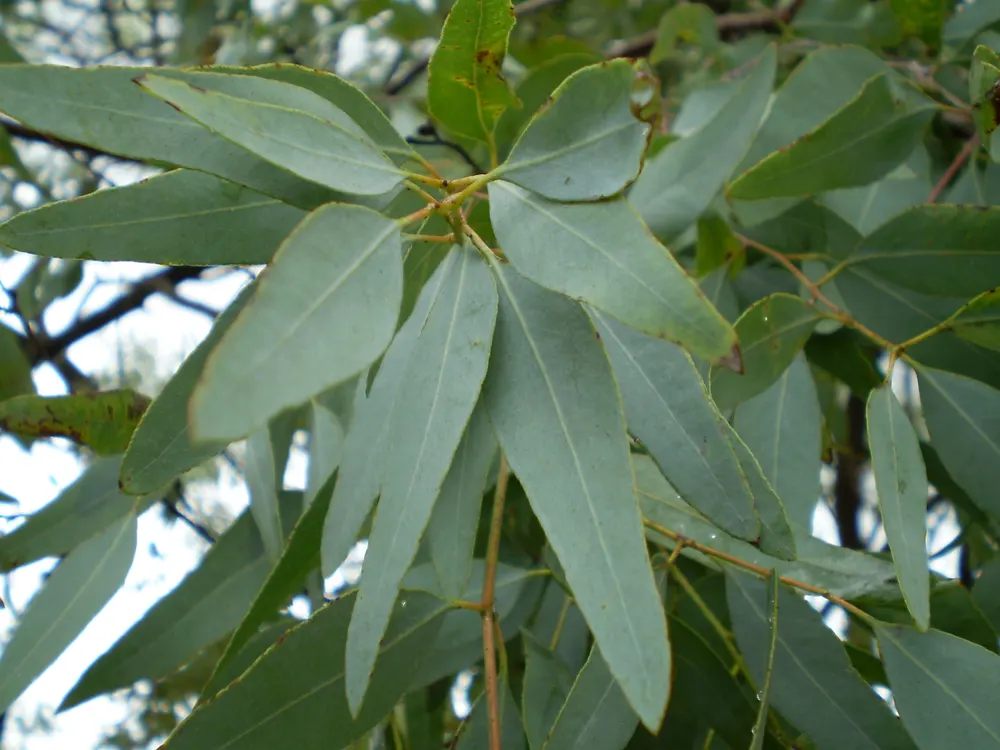
Photo: John Moss, Public domain (via Wikimedia Commons)
Lemon Ironbark
Eucalyptus staigeriana
Also known as Lemon-Scented Ironbark, Staiger's Gum, Citron-Scented Eucalyptus
Key benefits
✦Traditional uses
✦Long before it was known outside Australia, this lemon ironbark grew scattered through the dry woodlands of Cape York, where its narrow leaves carried a fragrance closer to lemon verbena than to the sharp medicinal camphor most people associate with eucalyptus. Australian Aboriginal communities across the continent had a long, varied relationship with eucalypt leaves generally, crushing and warming them to ease chesty colds and applying them to soothe aches, and staigeriana's unusually sweet, citral-rich oil later made it a favorite of perfumers and herbal distillers who wanted eucalyptus's clearing quality without the harshness. By the twentieth century, growers in Guatemala and Brazil had taken up staigeriana as a plantation crop, prized precisely because it smelled like a lemon grove rather than a hospital ward.
How to grow & use it
✦The full apothecary for Lemon Ironbark
Traditional remedies and step-by-step preparations, a complete growing guide, and how to harvest, dry, and store it, all unlocked with HerbLens Unlimited.
- ✦Remedies & preparations
- ✦ Growing guide
- ✦Harvest & storage
From under $6 a month. Free plant identifications always included.
- ✦Peppermint
- ✦Lemongrass
- ✦Rosemary
- ✦Lemon myrtle
- ✦Eucalyptus globulus
“When a stuffy head needs clearing and you would rather it smell like a lemon grove than a medicine cabinet.”
Most eucalyptus oils are dominated by cineole, which gives them that sharp, camphor-like medicinal smell, but staigeriana is unusual in being rich in citral instead, the same compound that gives lemongrass and lemon verbena their sweet citrus scent, which is why perfumers reach for it over almost any other eucalyptus.
Eucalyptus essential oil is toxic if swallowed, even small amounts have caused seizures and loss of consciousness in children, so never take it internally and keep it out of reach. Avoid using the oil or strong leaf preparations near the face of infants and young children. It may also interact with sedative medications and is best avoided during pregnancy and breastfeeding.