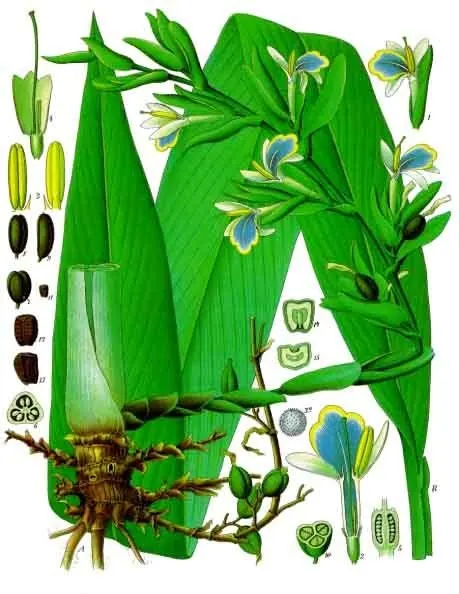
Photo: Franz Eugen Köhler, Köhler's Medizinal-Pflanzen, Public domain (via Wikimedia Commons)
Cardamom
Elettaria cardamomum
Also known as Green Cardamom, True Cardamom, Queen of Spices, Elaichi
Key benefits
✦Traditional uses
✦Cardamom has been treasured in India for so long that Ayurvedic texts already spoke of it as a warming digestive well over a thousand years ago, chewed after meals to settle the stomach and sweeten the breath. Traders carried its pods along the same ancient routes as pepper and cinnamon, and it eventually earned the nickname queen of spices for its price and its reach. Across the Middle East it became inseparable from hospitality itself, ground into coffee as a gesture of welcome that still marks Bedouin and Gulf households today. Traditional Chinese and Unani medicine likewise valued it for calming a troubled belly and clearing damp, heavy coughs.
How to grow & use it
✦The full apothecary for Cardamom
Traditional remedies and step-by-step preparations, a complete growing guide, and how to harvest, dry, and store it, all unlocked with HerbLens Unlimited.
- ✦Remedies & preparations
- ✦ Growing guide
- ✦Harvest & storage
From under $6 a month. Free plant identifications always included.
- ✦Ginger
- ✦Cinnamon
- ✦Cloves
- ✦A blend of cinnamon and nutmeg
- ✦Ground ginger with a touch of allspice
“When a meal needs warmth, and your stomach needs comfort.”
By weight, cardamom is often called the third most expensive spice in the world, after only saffron and vanilla, thanks to the painstaking hand-harvest its unevenly ripening pods demand.
Cardamom is safe as a culinary spice. Those with gallstones should be cautious since it can stimulate bile flow, and people allergic to ginger or turmeric should introduce it carefully.