Photo: Eric Hunt, CC BY-SA 4.0 (via Wikimedia Commons)
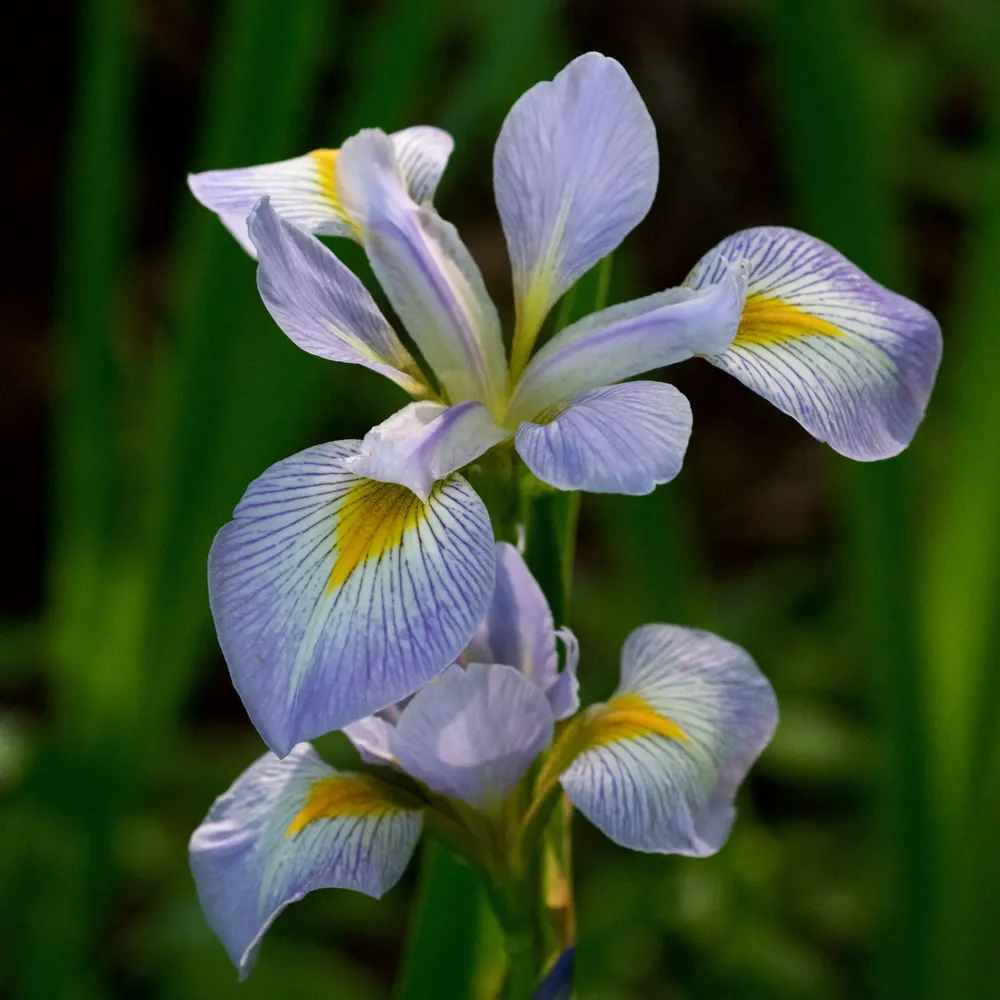
Southern Blue Flag
Iris virginica
Also known as Virginia Iris, Great Blue Flag, Wild Iris, Poison Flag
Key benefits
✦Traditional uses
✦Southern blue flag has long stood sentinel at the water's edge, its violet-blue blooms rising from the mud each spring like small flags planted in the marsh. Several Native American nations recognized the dried rhizome as a powerful medicine and prepared it with great care, using it sparingly as a purgative and applying poultices to the skin, knowledge passed down through generations who understood the difference between careful preparation and raw, unprocessed root. Early American settlers noted its acrid bite and generally left it alone, and by the time Western herbalism had cataloged the iris family, most physicians had come to treat the fresh rhizome as something to respect rather than reach for. Today the plant is prized far more for the beauty it brings to a rain garden or pond margin than for any remedy, and that is exactly how it is best enjoyed.
How to grow & use it
✦The full apothecary for Southern Blue Flag
Traditional remedies and step-by-step preparations, a complete growing guide, and how to harvest, dry, and store it, all unlocked with HerbLens Unlimited.
- ✦Remedies & preparations
- ✦ Growing guide
- ✦Harvest & storage
From under $6 a month. Free plant identifications always included.
- ✦Joe Pye weed
- ✦Swamp milkweed
- ✦Cardinal flower
- ✦Iris versicolor (also toxic, ornamental only)
- ✦Non-toxic pond plants like blue flag look-alike Louisiana iris cultivars for safer pet-friendly gardens
“For the marsh edge that needs a flag of violet fire each spring.”
The genus Iris was named for the Greek goddess of the rainbow, who was said to carry messages between the heavens and the earth, a fitting namesake for a flower that unfurls in nearly every shade of blue, violet, and white along the water's edge.
Every part of Iris virginica, and especially its thick rhizome, contains irritant compounds (including irisin and related resinoid glycosides) that can cause nausea, vomiting, diarrhea, and abdominal cramping if eaten. The fresh sap is acrid and can irritate skin and eyes on contact, and the plant is recognized as toxic to dogs, cats, and horses as well as people, so it should be kept well away from children, pets, and grazing animals. Some Indigenous traditions used the dried, carefully aged rhizome in small controlled doses as a strong purgative or in external poultices, but this required specialized knowledge to reduce its toxicity and is not something to attempt at home. This entry is for garden and identification purposes only. If you or a pet ingest any part of this plant, contact a doctor, veterinarian, or poison control right away, and speak with a qualified professional before using any iris species medicinally.