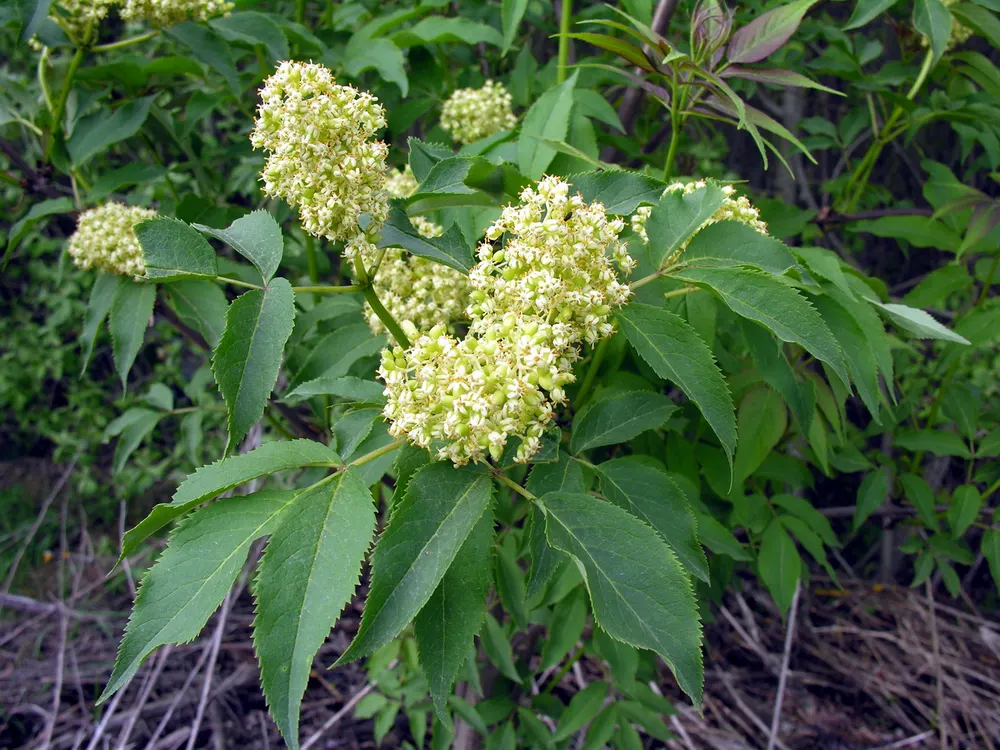
Photo: Algirdas at Lithuanian Wikipedia, CC BY-SA 3.0 (via Wikimedia Commons)
Red Elderberry
Sambucus racemosa
Also known as Red Elder, Bunchberry Elder, Rocky Mountain Elder, Scarlet Elder
Key benefits
✦Traditional uses
✦Long before red elderberry earned its cautious reputation, various Indigenous peoples across North America knew this shrub well, watching for its early, snow-melt blossoms as one of the first signs that the woods were waking. Some nations used the wood for tools, flutes, and arrow shafts, and the pithy stems were hollowed for whistles and blowguns, while the bark and roots occasionally appeared in external washes. Because red elderberry is markedly more toxic than its black and blue elder cousins, most traditional food and medicine uses were reserved for the flowers alone, prepared with great care, or avoided entirely in favor of safer relatives. Its story is really one of respect for a beautiful but unforgiving plant, valued more for what it offered the forest than what it offered the table.
How to grow & use it
✦The full apothecary for Red Elderberry
Traditional remedies and step-by-step preparations, a complete growing guide, and how to harvest, dry, and store it, all unlocked with HerbLens Unlimited.
- ✦Remedies & preparations
- ✦ Growing guide
- ✦Harvest & storage
From under $6 a month. Free plant identifications always included.
- ✦Black elderberry (Sambucus nigra)
- ✦Hawthorn (Crataegus species)
- ✦Blue elderberry (Sambucus cerulea)
- ✦Black elderberry (Sambucus nigra)
- ✦American elderberry (Sambucus canadensis)
“For the earliest blush of spring blossom and a shrub the birds will thank you for, not for the table.”
Red elderberry blooms so early that its flower clusters can appear while snow still lingers in the shade, making it one of the first food sources for returning pollinators and one of the earliest woodland shrubs to signal spring.
Red elderberry is more toxic than black elderberry and should not be eaten. Its raw berries, seeds, bark, leaves, and roots contain cyanide-producing compounds that cause nausea, vomiting, and cramping, with larger amounts causing more serious poisoning. It is not recommended for pregnant or nursing women, children, or pets, and no part should be foraged or prepared without expert identification.