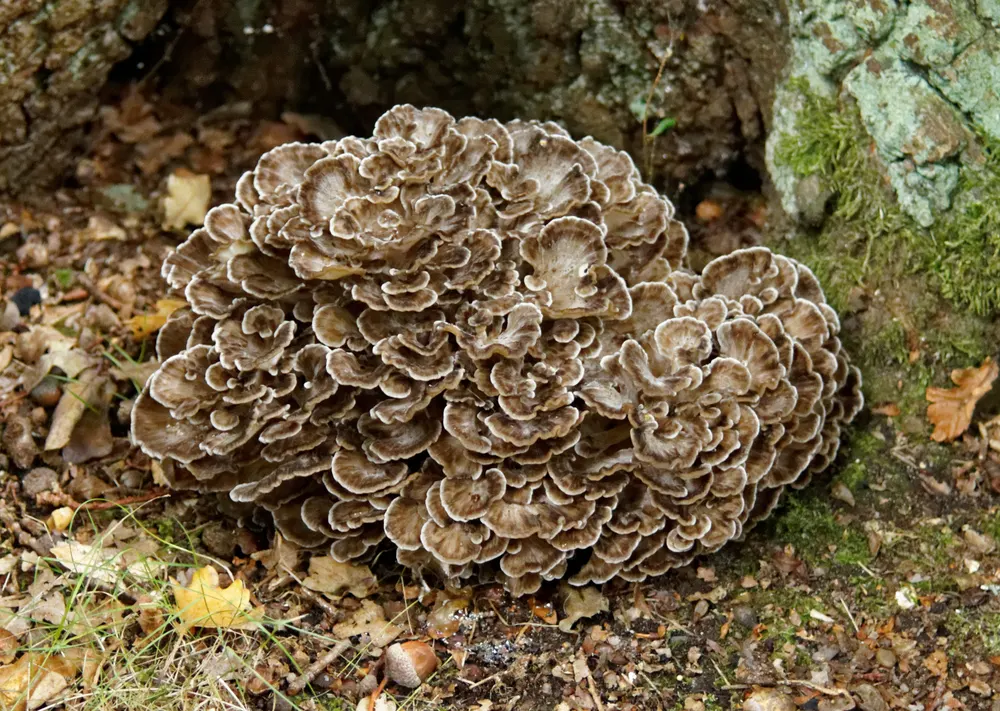
Photo: Lukas from London, England, CC BY-SA 2.0 (via Wikimedia Commons)
Maitake
Grifola frondosa
Also known as Hen of the Woods, Ram's Head, Sheep's Head, Dancing Mushroom
Key benefits
✦Traditional uses
✦Maitake has a long history in East Asian herbalism, where it was valued in Japan and China as a nourishing tonic for vitality and resilience, often set alongside reishi as one of the great forest medicines. In the Appalachian mountains, foragers who called it hen of the woods prized it just as highly, both as a hearty autumn food and as a homestead remedy for supporting the body through the cold months ahead. Its reputation traveled on two separate paths, East and West, yet both cultures arrived at the same quiet respect for the mushroom that gathers at the foot of old oaks.
How to grow & use it
✦The full apothecary for Maitake
Traditional remedies and step-by-step preparations, a complete growing guide, and how to harvest, dry, and store it, all unlocked with HerbLens Unlimited.
- ✦Remedies & preparations
- ✦ Growing guide
- ✦Harvest & storage
From under $6 a month. Free plant identifications always included.
- ✦Astragalus
- ✦Reishi
- ✦Fresh ginger
- ✦Reishi
- ✦Shiitake
“The season turns cool, the oaks drop their first leaves, and you want the deep, earthy steadiness of an old forest friend.”
The name maitake comes from the Japanese for dancing mushroom. Old accounts say foragers who found one in the forest would dance with joy, since a single cluster could be traded for its weight in silver.
Maitake is a well-known edible mushroom, but wild specimens should be identified with certainty before eating, since it can resemble other polypores. It may lower blood sugar and blood pressure, so use caution alongside diabetes or blood pressure medication, and avoid it if you have a mushroom allergy.