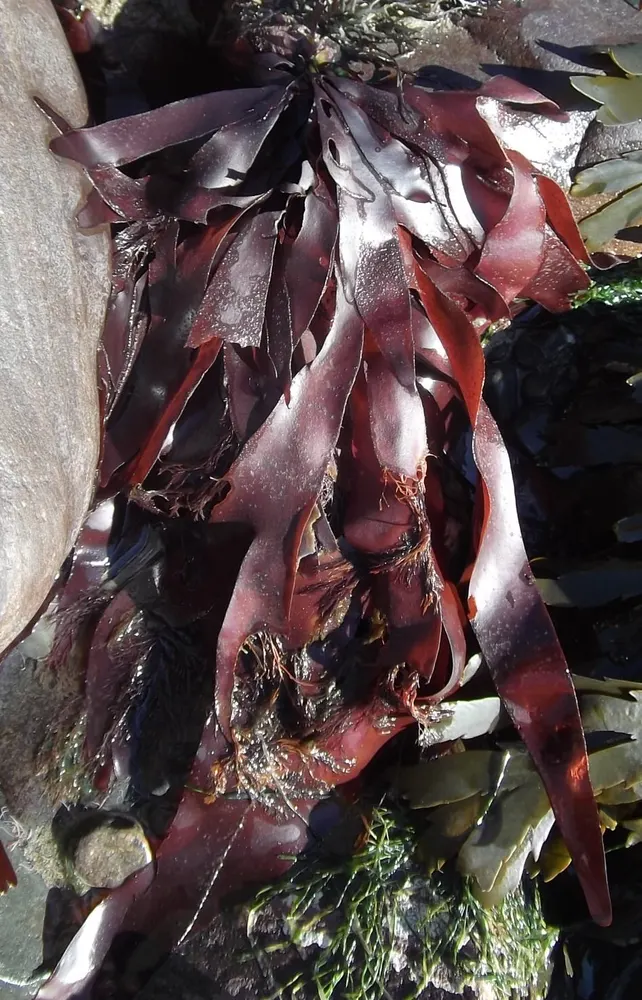
Photo: Cwmhiraeth, CC BY-SA 3.0 (via Wikimedia Commons)
Dulse
Palmaria palmata
Also known as Dilisk, Dillisk, Söl, Creathnach
Key benefits
✦Traditional uses
✦Along the cold shores of Ireland, Scotland, and Iceland, dulse has been gathered from the rocks at low tide for well over a thousand years, dried in the wind, and carried inland as a treasured trade good. Coastal families ate it plain as a chewy, salty snack, simmered it into soups and broths, and leaned on it through lean winters when fresh greens were scarce. Its iodine content made it a folk remedy for swollen throats and sluggish vitality long before anyone understood the thyroid, and sailors on long voyages chewed dried dulse to guard against scurvy. In Icelandic sagas it appears as söl, valued enough to be counted as part of a laborer's wages.
How to grow & use it
✦The full apothecary for Dulse
Traditional remedies and step-by-step preparations, a complete growing guide, and how to harvest, dry, and store it, all unlocked with HerbLens Unlimited.
- ✦Remedies & preparations
- ✦ Growing guide
- ✦Harvest & storage
From under $6 a month. Free plant identifications always included.
- ✦Bladderwrack
- ✦Kelp
- ✦Nettle
- ✦Kombu
- ✦Nori
“For the cook craving a taste of the tide, and a handful of minerals pulled straight from the deep.”
When lightly fried in butter, dulse develops a smoky, savory flavor so close to bacon that Oregon State University researchers nicknamed their cultivated strain the 'bacon of the sea.'
Dulse is naturally high in iodine, so those with thyroid conditions or on thyroid medication should watch their intake. As with any seaweed, source it from a reputable, tested supplier.