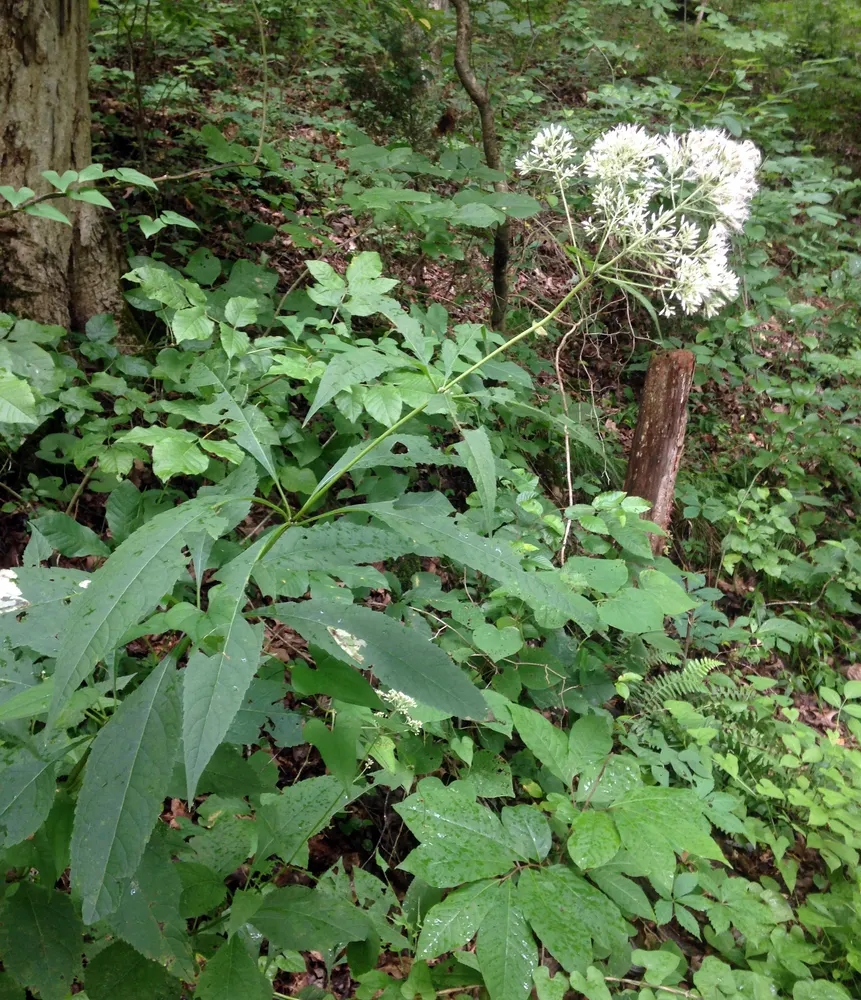
Photo: Mason Brock (Masebrock), Public domain (via Wikimedia Commons)
Joe Pye Weed
Eupatorium purpureum
Also known as Gravel Root, Queen of the Meadow, Kidney Root, Purple Boneset, Trumpet Weed
Key benefits
✦Traditional uses
✦Joe Pye Weed carries its own legend, said to be named for a Native American healer, sometimes remembered as Joe Pye or Jopi, who reportedly used the plant's root to break fevers and treat typhus among early New England colonists. Long before that borrowed name took hold, the Cherokee, Iroquois, and other nations dug the root each fall to ease urinary complaints, dissolve what old herbalists called gravel in the kidneys, and calm aching, rheumatic joints. By the nineteenth century, Eclectic physicians had folded gravel root into their standard kit for the urinary system, and it has stayed a familiar name in American herbalism ever since. The plant's towering, butterfly-crowded stalks made it just as beloved in the meadow as in the medicine chest.
How to grow & use it
✦The full apothecary for Joe Pye Weed
Traditional remedies and step-by-step preparations, a complete growing guide, and how to harvest, dry, and store it, all unlocked with HerbLens Unlimited.
- ✦Remedies & preparations
- ✦ Growing guide
- ✦Harvest & storage
From under $6 a month. Free plant identifications always included.
- ✦Marshmallow root
- ✦Dandelion leaf
- ✦Cleavers
- ✦Uva ursi
- ✦Cleavers
“For the tall pink giant at the meadow's edge, an old healer's fever herb and a forgotten kidney tonic, still humming with bees.”
Joe Pye Weed's common name honors a real (if now legendary and imperfectly documented) figure, a Native American healer who is said to have used the plant to break fevers among New England settlers, a story so tied to the plant that botanists eventually gave up trying to separate the man from the meadow weed he named.
Eupatorium species, including Joe Pye Weed, may contain trace pyrrolizidine alkaloids, compounds that in larger or prolonged doses have been associated with liver strain. For that reason, traditional preparations are meant to be used sparingly and briefly, not as a daily long-term tonic. It is not recommended during pregnancy or while breastfeeding, and it should be avoided by anyone with existing liver disease or who is taking medications that are hard on the liver. As with any root harvested from the wild, take care with correct identification, since Joe Pye Weed grows alongside other tall meadow plants. Please talk with a qualified healthcare provider or herbalist before using this plant medicinally, especially for internal or ongoing use.