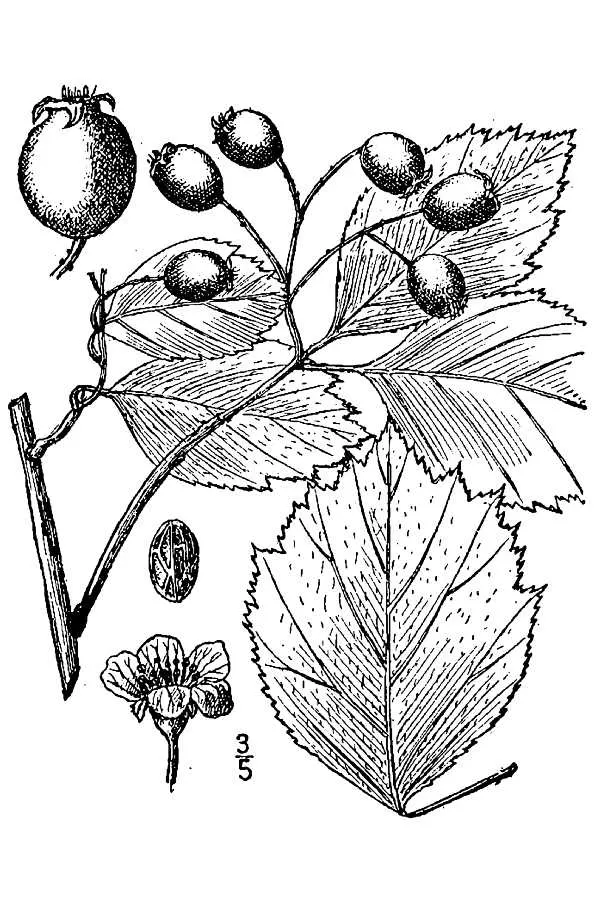
Photo: The original uploader was G716 at English Wikipedia., Public domain (via Wikimedia Commons)
Black Hawthorn
Crataegus douglasii
Also known as Douglas Hawthorn, Douglas's Thorn, River Hawthorn, Black Haw
Key benefits
✦Traditional uses
✦Long before it drew scientific attention, black hawthorn was a familiar presence to the Indigenous peoples of the Pacific Northwest, who ate the small haws fresh or dried them for winter stores, and put the tree's formidable thorns to work as fish hooks, awls, and probes. Its European cousins, Crataegus monogyna and laevigata, carry an equally long reputation in Old World herbalism, where hawthorn has traditionally been used as a gentle tonic for the heart and circulation for centuries. Herbalists in North America have carried that same tradition forward with the native black hawthorn, steeping its berries and blossoms into mild, reddish teas meant to be taken steadily over time rather than as a quick fix.
Growing guide
✦Fresh to dried
✦Traditional preparations
✦Hawthorn Berry Tea
A mellow, faintly tart infusion long favored in folk herbalism as a gentle daily tonic for the heart and circulation.
How it's made. Traditionally, a tea is made by steeping 1 teaspoon of dried, lightly crushed hawthorn berries in 250 ml of just-boiled water for 10 to 15 minutes, then straining before drinking.
Hawthorn Flower Tea
A lighter, more floral infusion made from the spring blossoms, used in the same traditional spirit as the berry tea.
How it's made. Steep 1 teaspoon of dried hawthorn flowers in 250 ml of just-boiled water for about 10 minutes, then strain.
- ✦Motherwort
- ✦Linden flower
- ✦Rose hip
- ✦English hawthorn (Crataegus monogyna or Crataegus laevigata), the closely related European species most often used in commercial hawthorn preparations
“When you want a gentle, old-fashioned ally for the heart, gathered from the same thickets where it has grown wild for centuries.”
The genus name Crataegus comes from the Greek word kratos, meaning strength, a nod to the tree's notoriously hard, dense wood. Coast Salish and other Pacific Northwest peoples put that toughness to work, using black hawthorn's long thorns as fish hooks, sewing awls, and even tools for piercing ears.
Hawthorn can interact with heart medications like digoxin, beta blockers, and blood pressure drugs, so check with a doctor if you take any of these. Don't chew the seeds inside the berries, and use caution during pregnancy or breastfeeding since safety isn't well established.