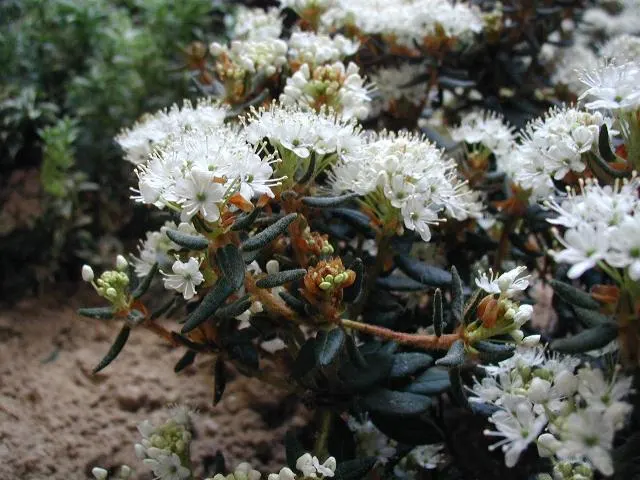
Photo: CC BY-SA 3.0 (via Wikimedia Commons)
Marsh Labrador Tea
Rhododendron tomentosum
Also known as Marsh Labrador tea, Wild rosemary, Northern Labrador tea, Marsh tea, Ledum palustre (older botanical synonym)
Key benefits
✦Traditional uses
✦Long before hops became the standard bittering agent in beer, brewers across Scandinavia, the Baltic states, and northern Germany added marsh Labrador tea to their gruit blends, prizing the heavy, dream-laden effect it lent to the brew, until Germany's 1516 beer purity law helped push such additives out of common use. Sami, Russian, and other northern European communities traditionally tucked its resinous sprigs among stored wool and furs to keep moths away, and treated the plant as a specific, carefully rationed folk remedy for coughs, colds, and aching joints rather than an everyday tea. Its thick, leathery leaves and narcotic-heavy scent made it a plant people respected as much as they used, gathered for particular purposes and handled with care. Today it is remembered more for its striking bog habitat and its place in brewing history than for any role in the modern kitchen or medicine cabinet.
How to grow & use it
✦The full apothecary for Marsh Labrador Tea
Traditional remedies and step-by-step preparations, a complete growing guide, and how to harvest, dry, and store it, all unlocked with HerbLens Unlimited.
- ✦Remedies & preparations
- ✦ Growing guide
- ✦Harvest & storage
From under $6 a month. Free plant identifications always included.
- ✦Sweet gale (Myrica gale)
- ✦Cedar shavings
- ✦Dried lavender
- ✦Cedarwood chips, for moth and insect repellent sachets
- ✦True Labrador tea, Rhododendron groenlandicum, though it calls for the same caution
“For the hushed, resin-scented bogs of the far north, where this shrub has always been handled with respect rather than reached for lightly.”
Medieval brewers in northern Europe once added this plant to gruit, the herbal blend used to flavor and preserve beer before hops took over, because it deepened intoxication and left drinkers with a heavier, headier feeling. That reputation is a big part of why Germany's 1516 beer purity law, the Reinheitsgebot, helped sweep it out of brewing for good.
All parts of Rhododendron tomentosum, especially the strong essential oil concentrated in its leaves, contain compounds (including ledol and palustrol) that are toxic if ingested beyond a very small amount, and historical accounts describe symptoms ranging from headache, dizziness, and vomiting to paralysis and convulsions after excessive use. The plant was also traditionally used in folk practice to bring on menstruation and end a pregnancy, so it should never be used, ingested, or handled as a remedy by anyone who is pregnant or trying to conceive. Its heavy fragrance and pollen have been linked to headaches and nausea in people who linger near dense stands in bloom, and the foliage is known to be toxic to grazing livestock. Because the line between traditional folk use and genuine harm is so narrow with this plant, HerbLens does not provide any preparation, dosing, or ingestion instructions for it. Anyone curious about its history or effects should speak with a qualified herbalist, toxicologist, or physician rather than experimenting on their own.