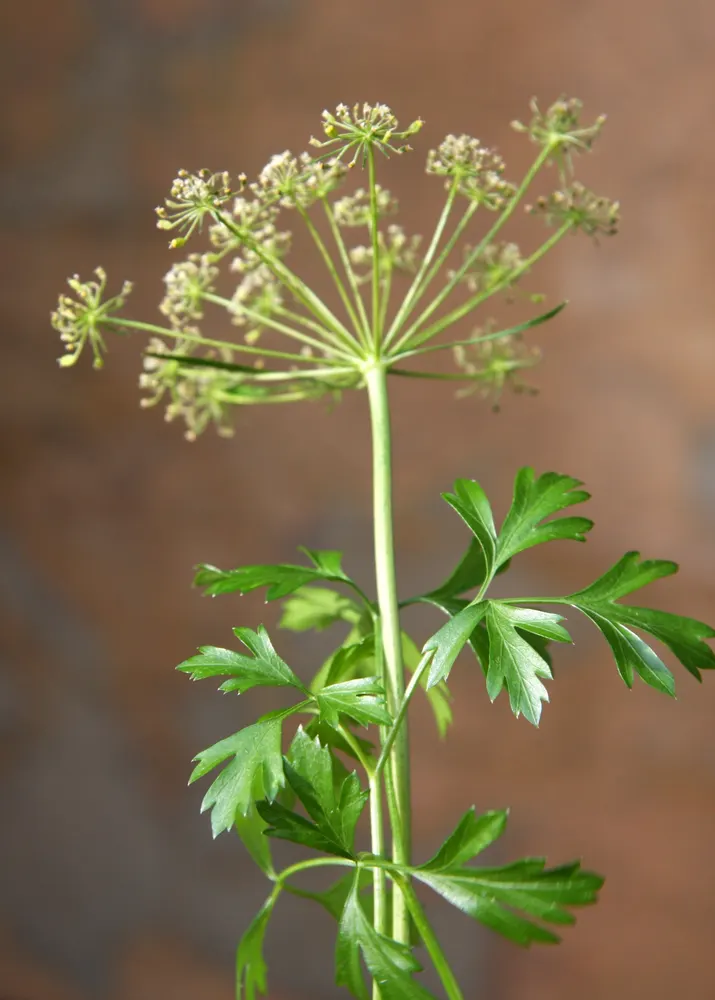
Photo: Jonathunder, GFDL 1.2 (via Wikimedia Commons)
Parsley
Petroselinum crispum
Also known as Garden Parsley, Rock Parsley, Curly Parsley, Persil
Key benefits
✦Traditional uses
✦Parsley has ridden along in the human kitchen for well over two thousand years, first as a medicinal and ceremonial plant and only later as the garnish it is best known for today. The ancient Greeks considered it too sacred and too bound up with death and mourning to eat freely, weaving it into funeral wreaths and crowning victors at the Isthmian games with it, while Roman cooks were the ones who finally put it on the plate, chewing the leaves after rich meals to settle the stomach and sweeten the breath. Across medieval Europe it became a household standby, tucked into broths and simples as a gentle tonic for digestion and for easing water retention. That long domestic history is really why parsley earned its permanent seat at the table, not as a decoration but as a working herb people reached for daily.
How to grow & use it
✦The full apothecary for Parsley
Traditional remedies and step-by-step preparations, a complete growing guide, and how to harvest, dry, and store it, all unlocked with HerbLens Unlimited.
- ✦Remedies & preparations
- ✦ Growing guide
- ✦Harvest & storage
From under $6 a month. Free plant identifications always included.
- ✦Mint
- ✦Lemon Balm
- ✦Fennel
- ✦Chervil
- ✦Cilantro
“For the small, faithful herb that quietly finishes every plate and every pot.”
The ancient Greeks thought it unlucky to eat parsley at all, believing it had sprung from the blood of the fallen hero Archemorus, so for centuries they wore it in funeral and victory wreaths instead of putting it on the table.
Parsley in ordinary culinary amounts is safe for most people, but concentrated parsley seed or seed oil has traditionally been avoided during pregnancy for its uterine-stimulant reputation. It's rich in vitamin K, so it may interact with blood thinners like warfarin, and its oxalate content means people prone to kidney stones should use it in moderation.