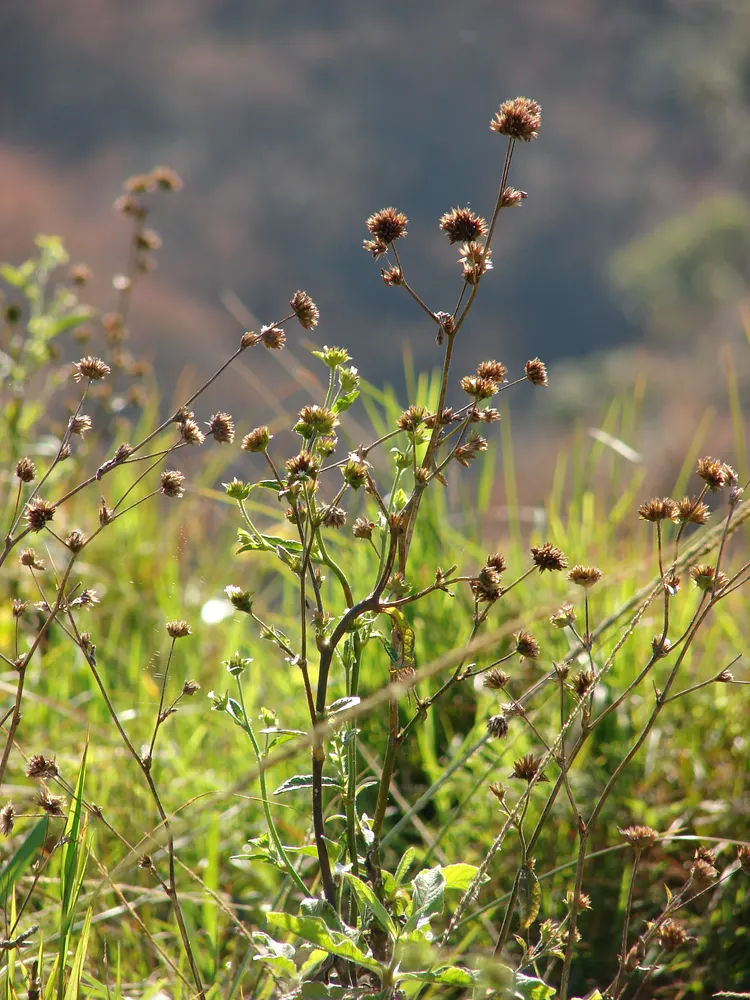
Photo: Forest & Kim Starr, CC BY 3.0 (via Wikimedia Commons)
Soft Elephant's Foot
Elephantopus mollis
Also known as Elephant's Foot, Tobacco Weed, Curadiente
Key benefits
✦Traditional uses
✦Across the tropical Americas, West Africa, and parts of Southeast Asia, Elephantopus mollis has grown as a familiar roadside and dooryard plant, and local healers have traditionally turned to its broad, felted leaves for fevers, coughs, and digestive upset. In West African traditions, a leaf decoction was passed down as a wash for cuts and skin sores, while communities in South America used the plant in similar ways to ease minor wounds and general malaise. Because it spreads so readily along footpaths and cleared land, it earned a reputation as a remedy that was always close at hand. Its close cousin, Elephantopus scaber, carries a longer written history in Ayurvedic and Chinese herbal traditions, and the two plants have often been used interchangeably by healers who encountered whichever grew nearby.
How to grow & use it
✦The full apothecary for Soft Elephant's Foot
Traditional remedies and step-by-step preparations, a complete growing guide, and how to harvest, dry, and store it, all unlocked with HerbLens Unlimited.
- ✦Remedies & preparations
- ✦ Growing guide
- ✦Harvest & storage
From under $6 a month. Free plant identifications always included.
- ✦Lemongrass
- ✦Guava leaf
- ✦Bitter leaf (Vernonia)
- ✦Elephantopus scaber
- ✦Vernonia amygdalina
“For the humble roadside leaf that has quietly walked beside village healers for generations.”
The genus name Elephantopus comes straight from the Greek for elephant's foot, a nod to the plant's broad, thick, low-lying leaves that spread across the ground like a great footprint pressed into the soil.
This plant contains compounds that are cytotoxic in concentrated extract form, so it should not be self-prepared as a tincture or extract. As a daisy-family plant it may trigger allergic reactions in those sensitive to ragweed, and it should be avoided during pregnancy and breastfeeding.