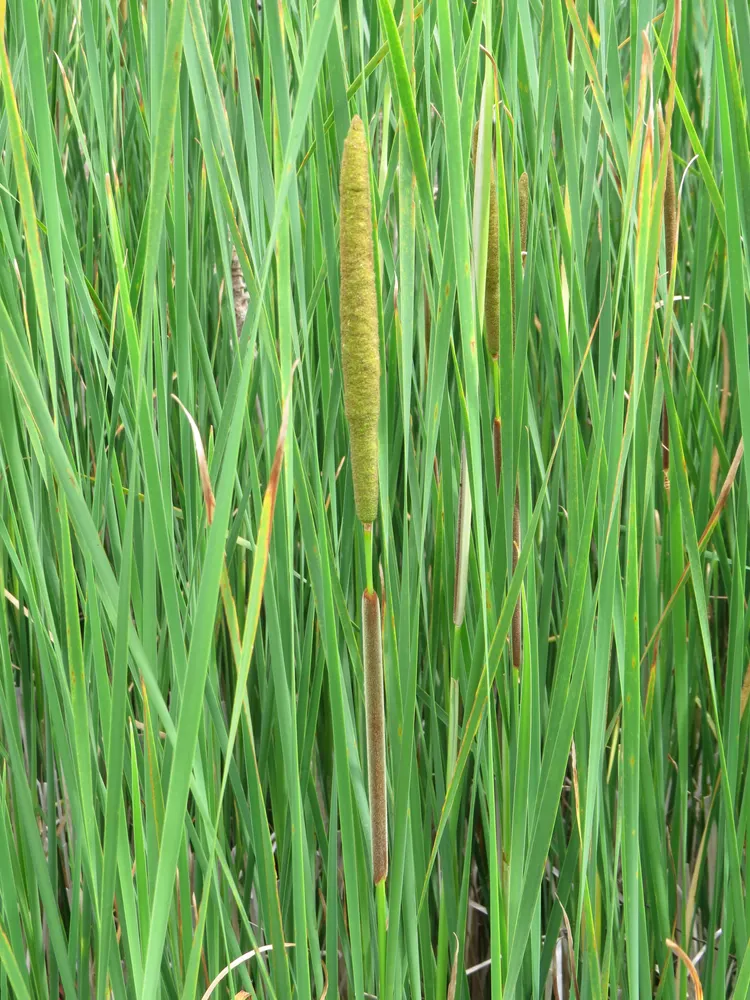
Photo: MPF, CC BY-SA 4.0 (via Wikimedia Commons)
Narrowleaf Cattail
Typha angustifolia
Also known as Narrow-leaved Cattail, Lesser Bulrush, Reedmace
Key benefits
✦Traditional uses
✦Long before it was a roadside curiosity, narrowleaf cattail was a pantry, a medicine cabinet, and a hardware store all growing at the water's edge. Many Native American nations and other wetland cultures around the world dug the starchy rhizomes for flour, gathered the golden pollen to enrich breads and porridges, and ate the young shoots much like a wild asparagus. The soft down packed inside the female flower spike was traditionally tucked around burns, scrapes, and chafed skin as a cushioning, absorbent dressing, and stuffed into moccasins, bedding, and baby wrappings for its remarkable softness.
How to grow & use it
✦The full apothecary for Narrowleaf Cattail
Traditional remedies and step-by-step preparations, a complete growing guide, and how to harvest, dry, and store it, all unlocked with HerbLens Unlimited.
- ✦Remedies & preparations
- ✦ Growing guide
- ✦Harvest & storage
From under $6 a month. Free plant identifications always included.
- ✦Plantain
- ✦Comfrey
- ✦Yarrow
- ✦Broadleaf cattail (Typha latifolia)
- ✦Bulrush (Schoenoplectus species)
“For the forager drawn to still water, where one quiet marsh plant offers food, fiber, and gentle first aid all at once.”
The fluffy down packed inside a cattail spike was one of the most reliable natural tinders known to woodland travelers, catching a spark so readily that a single spike could start several fires, and it doubled as stuffing for pillows and insulation in old homesteads.
Cattail is a safe, widely eaten wetland plant, but only harvest from clean water since it readily absorbs pollutants, and take care with identification, as young shoots can resemble the deadly poisonous water hemlock.