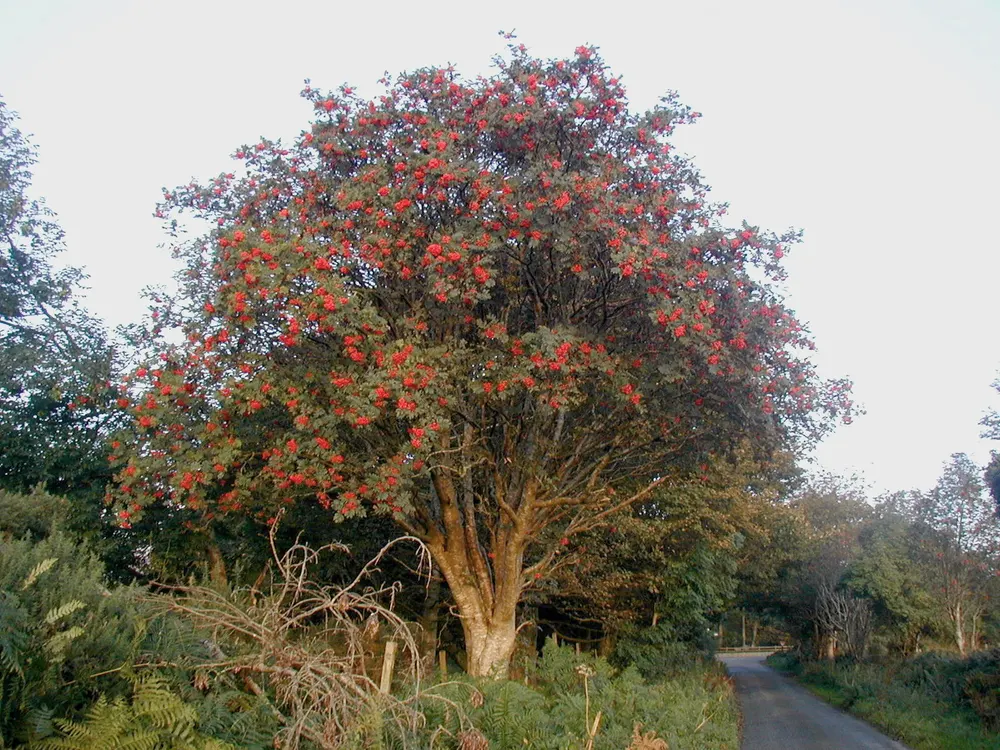
Photo: Eeno11, CC BY-SA 3.0 (via Wikimedia Commons)
Rowan
Sorbus aucuparia
Also known as Mountain Ash, European Rowan, Quickbeam, Witch Wood
Key benefits
✦Traditional uses
✦Long before it graced cottage gardens, rowan stood sentinel at doorways and crossroads across Britain and Scandinavia, planted for protection and woven into folklore as a guardian tree. Its tart, glossy berries were gathered each autumn by generations of northern European foragers and cooked into jellies, syrups, and wines that carried families through the lean, cold months. Folk healers traditionally turned to rowan berry preparations to soothe sore, scratchy throats and to fortify the body against the first chills of winter, valuing the fruit as a bright, sharp dose of vitamin C when fresh greens were scarce. Even the pale spring blossoms and silvery bark found their way into old herbals, though it is the berry that has always been rowan's true gift.
How to grow & use it
✦The full apothecary for Rowan
Traditional remedies and step-by-step preparations, a complete growing guide, and how to harvest, dry, and store it, all unlocked with HerbLens Unlimited.
- ✦Remedies & preparations
- ✦ Growing guide
- ✦Harvest & storage
From under $6 a month. Free plant identifications always included.
- ✦Rosehip
- ✦Elderberry
- ✦Thyme
- ✦Hawthorn berry
- ✦Rosehip
“For the first cold winds of autumn, when the berries blaze red against a bare, silvering sky.”
In Norse mythology, the rowan tree was said to have saved the god Thor from a raging river by bending its branches down to him, and for centuries afterward it was planted by cottage doors across Scandinavia and Britain as a guardian against ill fortune.
Raw rowan berries contain parasorbic acid and can cause nausea and stomach cramps, so cook, dry, freeze, or ferment them before eating. Avoid chewing the seeds.