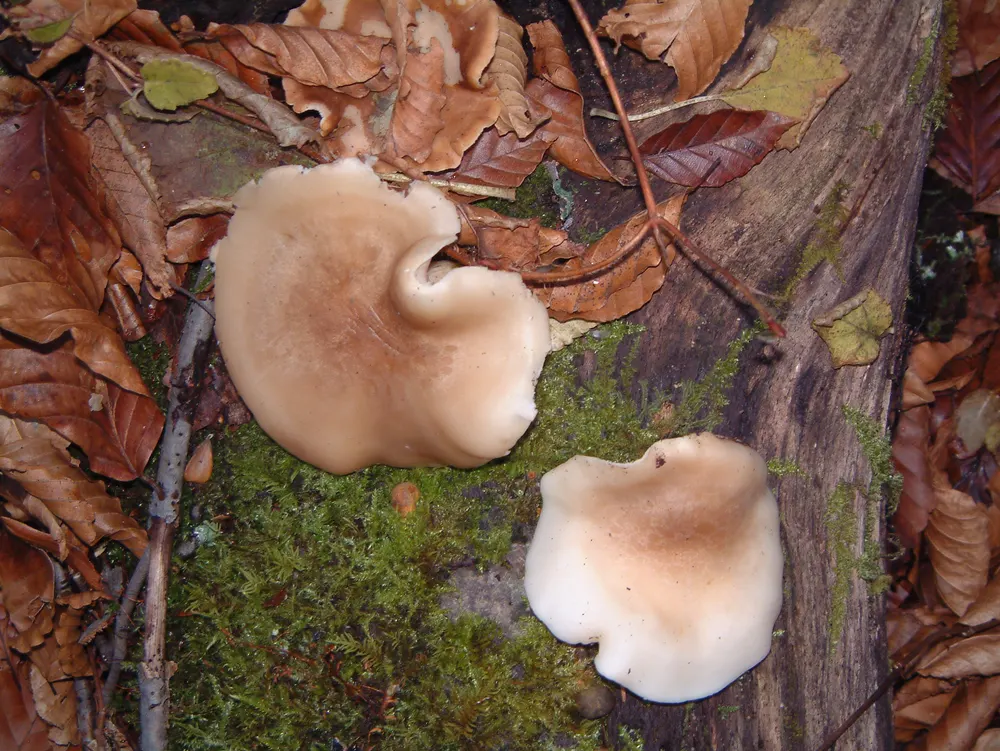
Photo: Akira.Sasaki, Public domain (via Wikimedia Commons)
Beech Mushroom
Hypsizygus marmoreus
Also known as Bunashimeji, Buna-shimeji, Shimeji Mushroom, Clamshell Mushroom, Marble Mushroom
Key benefits
✦Traditional uses
✦The beech mushroom has quietly fed households across Japan and China for generations, first gathered from the fallen limbs of beech trees in cool autumn forests and later, from the 1970s onward, coaxed into cultivation on sawdust blocks so it could reach markets year round. In East Asian kitchen tradition, mushrooms like this one were valued not only as an everyday food but as a small daily tonic, tucked into simmering broths and hot pots on the belief that they helped fortify the body through the cold months. It carries none of the dramatic medicinal reputation of a lingzhi or a cordyceps, but its steady, humble place at the table across centuries earns it a spot in the same shared story of mushrooms as nourishment and resilience. Today it remains a staple of home cooking wherever East Asian culinary tradition has taken root.
How to grow & use it
✦The full apothecary for Beech Mushroom
Traditional remedies and step-by-step preparations, a complete growing guide, and how to harvest, dry, and store it, all unlocked with HerbLens Unlimited.
- ✦Remedies & preparations
- ✦ Growing guide
- ✦Harvest & storage
From under $6 a month. Free plant identifications always included.
- ✦Shiitake
- ✦Ginger
- ✦Garlic
- ✦Shiitake mushroom
- ✦Enoki mushroom
“For the pot that needs a little more earth in it, something firm enough to hold its bite through a long simmer.”
The species name marmoreus means marbled in Latin, a nod to the faint smoky, marble-like mottling on the caps of the brown variety, which is actually the same species as the more common all-white form sold in stores, just left a bit less refined in cultivation.
Beech mushrooms are a safe cultivated food; cook them before eating, as eating them raw can cause stomach upset.