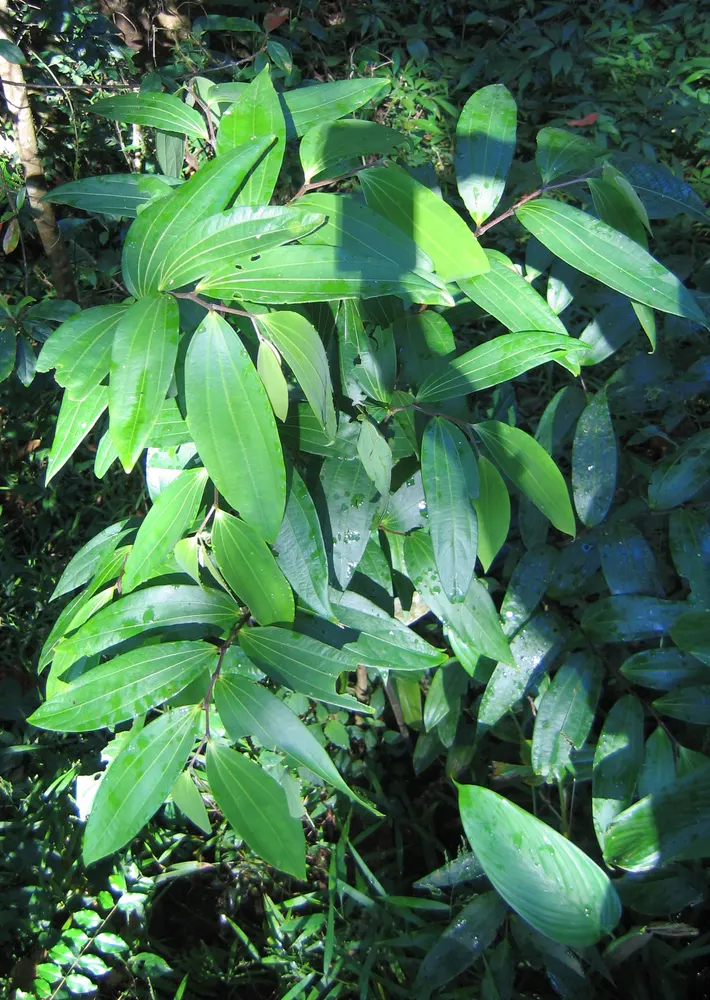
Photo: Vinayaraj, CC BY-SA 3.0 (via Wikimedia Commons)
Sapsanda
Thottea siliquosa
Also known as Sapsanda, Sudu Sapsanda, Larger Thottea, Siliquose Thottea
Key benefits
✦Traditional uses
✦In the forest villages of the Western Ghats and Sri Lanka's wet zone, local healers have long known Thottea siliquosa as a quiet, unglamorous relative of the better documented birthworts. Its roots were traditionally dug and prepared as a folk remedy for snakebite, fevers, and stubborn wounds, and it held a place in some regional traditions as a means of bringing on delayed menstruation. These uses were passed down through oral tradition rather than formal texts, and the plant never achieved the wide trade or fame of its cousin Aristolochia indica, though the two were sometimes used interchangeably by healers who considered them close kin. Modern phytochemical study has since found that this family-wide kinship runs deeper than appearance, which is why the plant's history is remembered here but not repeated as a remedy.
How to grow & use it
✦The full apothecary for Sapsanda
Traditional remedies and step-by-step preparations, a complete growing guide, and how to harvest, dry, and store it, all unlocked with HerbLens Unlimited.
- ✦Remedies & preparations
- ✦ Growing guide
- ✦Harvest & storage
From under $6 a month. Free plant identifications always included.
- ✦Often found growing near wild ginger relatives and Piper vines in the same shaded forest floor
- ✦Shares its understory habitat with Curcuma and other shade-loving rainforest herbs
- ✦Calendula, for gentle traditional wound care
- ✦Echinacea, for traditional immune support
“A quiet, curious presence of the forest floor, best left to grow undisturbed rather than gathered.”
The genus Thottea was named in honor of Otto Thott, an 18th-century Danish count and statesman whose enormous personal library and patronage supported the natural sciences of his day, a rather grand namesake for such a modest forest floor shrub.
Thottea siliquosa contains aristolochic acids, potent kidney toxins classified as human carcinogens even after brief exposure. It should never be ingested in any form, including during pregnancy.