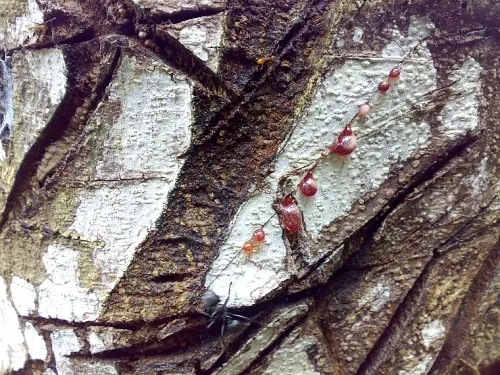
Photo: por natikka, CC BY 2.5 (via Wikimedia Commons)
Sangre de Drago
Croton lechleri
Also known as Dragon's Blood, Sangre de Grado, Croton's Blood, Palo de Sangre
Key benefits
✦Traditional uses
✦For generations, healers among the Shipibo-Conibo and other Amazonian peoples have scored the bark of this rainforest tree to collect its thick, blood-red latex, prizing it as one of the forest's great first-aid remedies. The sap was traditionally dabbed directly onto cuts, insect bites, and irritated skin, where it dries into a natural protective seal. Taken in small, well-diluted amounts, it was also used traditionally to settle an upset stomach after long river journeys. Its striking color and quick-acting reputation made it one of the most traded botanical remedies to come out of the Amazon.
How to grow & use it
✦The full apothecary for Sangre de Drago
Traditional remedies and step-by-step preparations, a complete growing guide, and how to harvest, dry, and store it, all unlocked with HerbLens Unlimited.
- ✦Remedies & preparations
- ✦ Growing guide
- ✦Harvest & storage
From under $6 a month. Free plant identifications always included.
- ✦Chamomile
- ✦Calendula
- ✦Plantain leaf
- ✦Dragon's blood resin (Daemonorops or Croton species)
- ✦Myrrh resin
“When the forest itself seems to offer its hand, a crimson tear of sap for the small hurts of the day.”
Spanish explorers who first saw the tree's bark weep its deep red sap named it 'sangre de drago,' or dragon's blood, and the name has stuck in the Amazon ever since.
This latex can irritate skin or trigger an allergic reaction, so dilute it and patch-test before use, and don't apply it to deep, large, or infected wounds. Avoid internal use during pregnancy and breastfeeding.