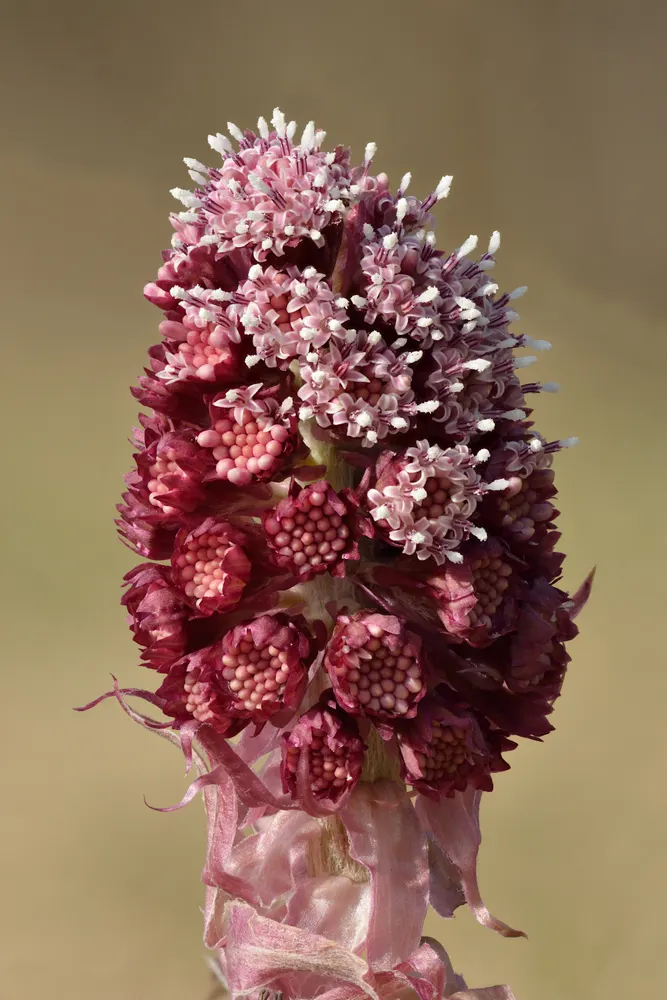
Photo: Ivar Leidus, CC BY-SA 4.0 (via Wikimedia Commons)
Butterbur
Petasites hybridus
Also known as Bog Rhubarb, Butterdock, Blatterdock, Langwort, Pestilence Wort
Key benefits
✦Traditional uses
✦Butterbur takes its curious name from the broad, rhubarb-like leaves that country folk once used to wrap and cool pats of butter on hot summer days. For centuries it was gathered along European riverbanks as a folk remedy for fevers, coughs, and aching joints, and medieval herbalists called it Petasites, from the Greek word for a broad-brimmed hat, for the way its leaves could shelter a person from rain. In more recent generations it became best known in folk tradition as a remedy reached for at the first sign of a migraine or hay fever, a reputation that eventually drew the attention of modern researchers. That same history is exactly why the plant demands respect today, since the very root and leaf that healers once dried and steeped are now known to carry compounds that can seriously harm the liver.
How to grow & use it
✦The full apothecary for Butterbur
Traditional remedies and step-by-step preparations, a complete growing guide, and how to harvest, dry, and store it, all unlocked with HerbLens Unlimited.
- ✦Remedies & preparations
- ✦ Growing guide
- ✦Harvest & storage
From under $6 a month. Free plant identifications always included.
- ✦Feverfew
- ✦Meadowsweet
- ✦Feverfew
- ✦Willow bark
“For the wild, damp corner of the garden where nothing else will thrive, not for the medicine cabinet.”
Butterbur's leaves can grow so enormous, sometimes nearly a yard across, that in old English villages a single leaf was large enough to wrap a full pound of butter, which is exactly how the plant earned its everyday name.
Petasites hybridus is genuinely dangerous when prepared at home. Its raw root and leaves contain unsaturated pyrrolizidine alkaloids (UPAs), compounds known to be toxic to the liver and classified as potential human carcinogens with long-term use. Unprocessed teas, tinctures, or poultices made from garden-variety butterbur should never be ingested. Even the specially manufactured, pyrrolizidine-alkaloid-free extracts sold commercially for migraine or allergy support have been linked in rare cases to liver injury, and they are not appropriate during pregnancy or breastfeeding, for anyone with liver disease, or for those allergic to ragweed, chrysanthemums, marigolds, or other members of the daisy family. Because of these serious risks, this plant should only ever be approached, if at all, through a qualified healthcare professional and a properly certified product, never through home preparation.