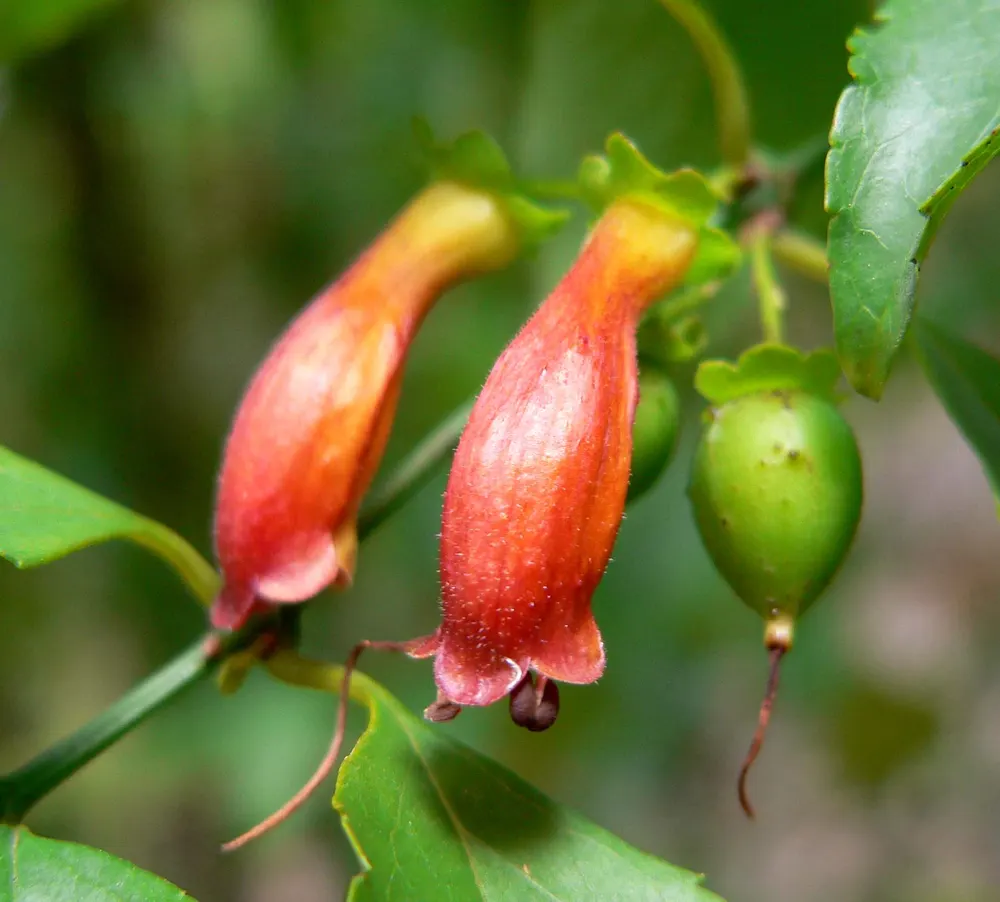
Photo: Stan Shebs, CC BY-SA 3.0 (via Wikimedia Commons)
Tree Fuchsia
Halleria lucida
Also known as Tree Fuchsia, Wild Fuchsia
Key benefits
✦Traditional uses
✦In the forests and gardens of South Africa, the tree fuchsia has long been known as a plant of small, practical comforts. Zulu traditional healers have used a warmed infusion of the leaves as drops for earache and as a gentle wash for sore, inflamed eyes, and the crushed leaves have also been applied as a folk remedy to soothe minor skin irritations. Long before it earned a place in ethnobotanical record books, children learned to pinch the base of its curved orange flowers and suck out the drop of sweet nectar inside, a small forest treat passed down the same way the plant itself has been, quietly and by hand.
How to grow & use it
✦The full apothecary for Tree Fuchsia
Traditional remedies and step-by-step preparations, a complete growing guide, and how to harvest, dry, and store it, all unlocked with HerbLens Unlimited.
- ✦Remedies & preparations
- ✦ Growing guide
- ✦Harvest & storage
From under $6 a month. Free plant identifications always included.
- ✦African Wormwood (Artemisia afra)
- ✦Buchu (Agathosma)
- ✦Cancer Bush (Sutherlandia)
- ✦Calendula
- ✦Plantain leaf
“For the shaded forest corner of a garden that wants to hum with sunbirds through the quiet heart of winter.”
The tree fuchsia's tubular flowers often burst straight out of old bare wood, even along the trunk, a rare habit called cauliflory that lets sunbirds reach the nectar through winter when little else in the forest is blooming.
No significant toxicity is documented for tree fuchsia, but leaf preparations should not be put in the eyes or ears without medical guidance, since that can cause irritation or infection.