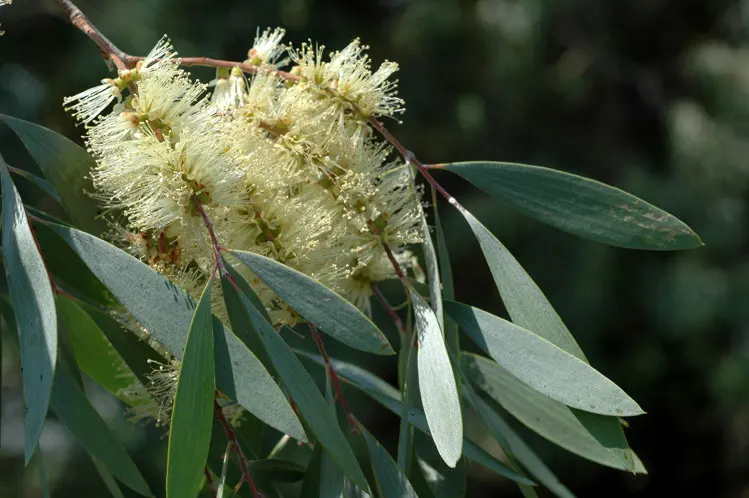
Photo: Murray Fagg, CC BY 3.0 (via Wikimedia Commons)
Cajeput Tree
Melaleuca cajuputi
Also known as Cajuput, Cajeput, White Wood, Swamp Tea-Tree, Paperbark Tea Tree
Key benefits
✦Traditional uses
✦Cajeput takes its name from the Malay words kayu putih, meaning white wood, a nod to the tree's pale, papery, peeling bark that shreds in long strips along the trunk. For generations, communities across the Maluku Islands, Malaysia, and Vietnam distilled its leaves into a sharp, camphor-scented oil kept in nearly every household medicine chest, used as a warming rub for aching joints, chest colds, and stomach upset. Dutch traders carried cajuput oil back to Europe as early as the seventeenth century, making it one of the very first essential oils to travel from the tropics into Western apothecaries. It has long traveled alongside its cousins tea tree and eucalyptus as a trusted remedy for the damp chill of a cold or the ache of overworked muscles.
How to grow & use it
✦The full apothecary for Cajeput Tree
Traditional remedies and step-by-step preparations, a complete growing guide, and how to harvest, dry, and store it, all unlocked with HerbLens Unlimited.
- ✦Remedies & preparations
- ✦ Growing guide
- ✦Harvest & storage
From under $6 a month. Free plant identifications always included.
- ✦Eucalyptus
- ✦Tea Tree
- ✦Peppermint
- ✦Tea Tree oil
- ✦Eucalyptus oil
“When a chest feels tight and heavy, and what is needed is a clean, camphor-bright breath of relief.”
Cajuput oil was among the very first tropical essential oils to reach European apothecaries, shipped west by Dutch traders in the 1600s from the spice-rich Maluku Islands, long before eucalyptus or tea tree oil became household names.
Cajuput is used strictly as an essential oil, applied to the skin or inhaled as steam, never swallowed. Ingesting cajuput oil, even in small amounts, can be seriously toxic, causing nausea, vomiting, drowsiness, and breathing trouble, and it has been linked to accidental poisonings in young children in regions where it is common in the household medicine cabinet. The undiluted oil can also irritate or burn skin and mucous membranes, so it should always be diluted in a carrier oil before topical use, and kept well away from the eyes. It is best avoided during pregnancy and breastfeeding, and used with extra caution around infants and young children. Keep the oil safely out of reach of children and pets. As always, talk to a qualified healthcare professional or aromatherapist before using cajuput, particularly if pregnant, nursing, or taking other medications.