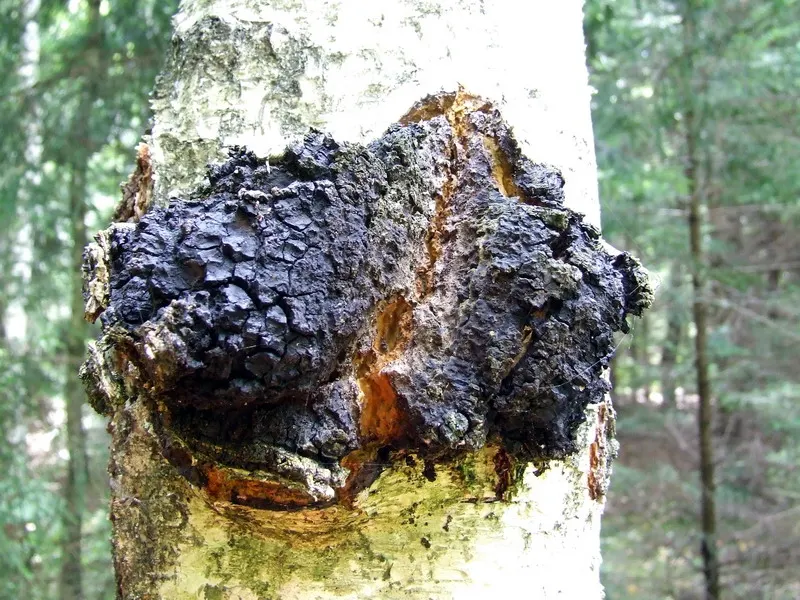
Photo: Tocekas, CC BY-SA 3.0 (via Wikimedia Commons)
Chaga
Inonotus obliquus
Also known as Chaga mushroom, Clinker polypore, Cinder conk, Birch canker polypore, Black mass
Key benefits
✦Traditional uses
✦For centuries, people across the birch forests of Siberia, Russia, and the Baltic states have chipped this dark, clinker-like growth from living birch trunks and simmered it into a dark, earthy tea, sometimes calling it a gift from the forest for the long, cold months. It has traditionally been valued as a tonic to support the body through winter and to help the immune system along, taken the way a family might reach for a familiar cup during flu season. During hardship, especially in wartime Russia and the Baltics, dried and roasted chaga was also brewed as a humble coffee substitute when real coffee was scarce. Its reputation traveled into Western herbalism more recently, but its roots in folk practice run deep and old.
How to grow & use it
✦The full apothecary for Chaga
Traditional remedies and step-by-step preparations, a complete growing guide, and how to harvest, dry, and store it, all unlocked with HerbLens Unlimited.
- ✦Remedies & preparations
- ✦ Growing guide
- ✦Harvest & storage
From under $6 a month. Free plant identifications always included.
- ✦Birch bark
- ✦Reishi
- ✦Cinnamon
- ✦Reishi
- ✦Turkey tail
“When the northern woods turn quiet and cold, and you want something dark, slow, and woodsy steeping on the stove.”
Chaga's dense, dark conk is technically not the fungus's true fruiting body at all. The real spore-producing structure only appears, thin and flat, on the underside of the tree after the birch has died, which is why foragers rarely see it and why the familiar black clinker is the part everyone knows.
Chaga is generally safe as an occasional tea, but it's high in oxalates, so people prone to kidney stones should be cautious. It may thin the blood and lower blood sugar, so use caution with anticoagulant, antiplatelet, or diabetes medication, or before surgery, and it's also traditionally avoided alongside immunosuppressant drugs. Buy from a reputable source or forage carefully, since chaga can be confused with other black growths on trees.