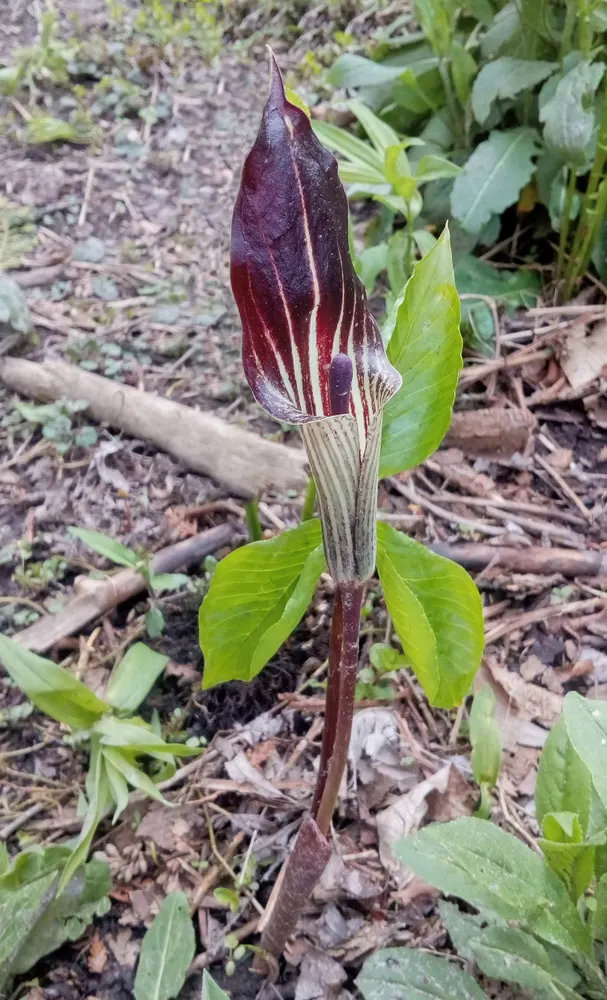
Photo: СССР, CC BY-SA 2.5 ca (via Wikimedia Commons)
Jack-in-the-pulpit
Arisaema triphyllum
Also known as Indian turnip, Bog onion, Wake robin, Brown dragon, Arisaema atrorubens
Traditional uses
✦Jack-in-the-pulpit is better known as a woodland curiosity than a working herb, its hooded flower has delighted foragers and children on forest walks for generations. Several Native American nations, including the Iroquois and Algonquin peoples, dried and pounded the corm over long periods, sometimes for months, to break down its needle-sharp crystals before using it sparingly as a starchy food or a topical treatment for sores and ringworm. That processing knowledge was hard won and specific, and it is not something to attempt casually today. This is a plant to admire in the woods, not one to bring into a home remedy cabinet.
How to grow & use it
✦The full apothecary for Jack-in-the-pulpit
Traditional remedies and step-by-step preparations, a complete growing guide, and how to harvest, dry, and store it, all unlocked with HerbLens Unlimited.
- ✦Remedies & preparations
- ✦ Growing guide
- ✦Harvest & storage
From under $6 a month. Free plant identifications always included.
- ✦Trillium
- ✦Bloodroot
- ✦Mayapple
“For the quiet wonder of finding a hooded green preacher tucked into the forest shade, not for the medicine chest.”
Jack-in-the-pulpit can change sex from year to year depending on how much energy the plant has stored, small or stressed plants often bloom male, while larger, well fed plants switch to female and produce a cluster of bright red berries by fall.
Every part of Jack-in-the-pulpit contains sharp, microscopic calcium oxalate crystals that cause immediate, intense burning and swelling of the lips, mouth, tongue, and throat if chewed or eaten raw or improperly prepared, in severe cases this swelling can interfere with breathing or swallowing. The fresh corm and berries are considered toxic and unsafe to eat, and even historic preparation methods required extensive drying over weeks or months to reduce this risk, a process not suited to casual or modern home use. This plant should not be ingested, applied to broken skin, or given to children or pets, who may be drawn to its bright red berry cluster. If you or someone else has chewed or swallowed any part of this plant, contact Poison Control or seek emergency care right away, and always consult a qualified healthcare professional or medical toxicologist rather than relying on foraging lore for anything you plan to eat or apply.