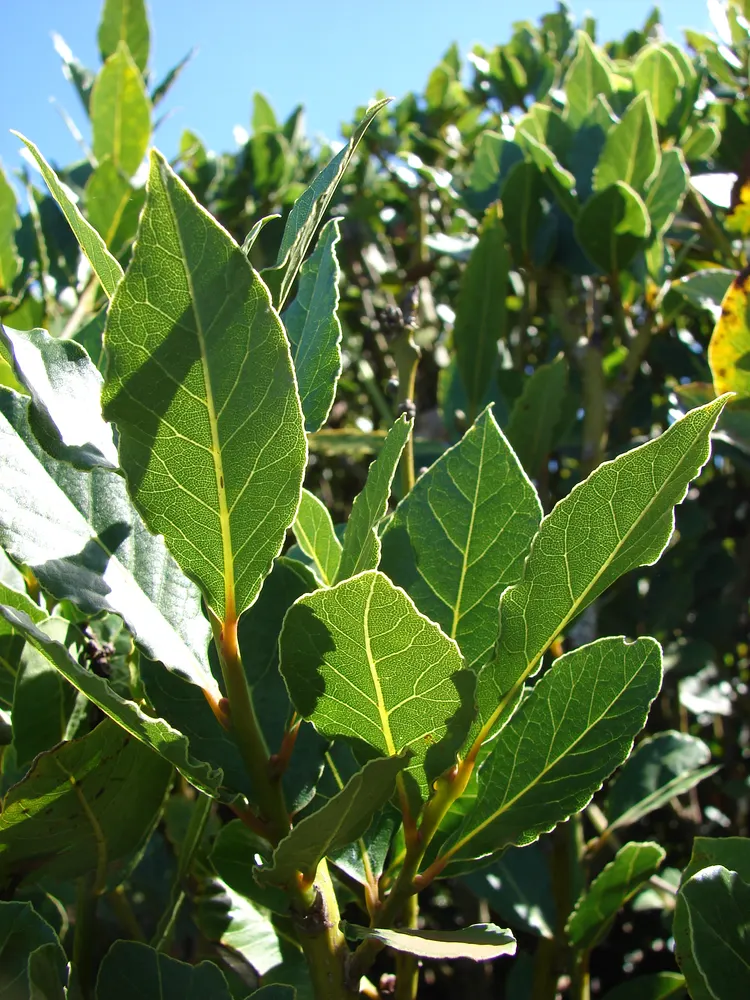
Photo: Forest and Kim Starr, CC BY 3.0 us (via Wikimedia Commons)
Bay Laurel
Laurus nobilis
Also known as Bay Leaf, Sweet Bay, True Laurel, Grecian Laurel
Key benefits
✦Traditional uses
✦Long before bay leaves found their way into the family soup pot, they crowned the heads of victors, poets, and emperors across ancient Greece and Rome, a symbol so enduring it still lingers in words like laureate. Kitchens across the Mediterranean have leaned on the leathery leaf for centuries, simmering it into stews, broths, and bean pots to draw out a quiet, resinous depth that no other herb quite replicates. Beyond the table, folk healers traditionally steeped bay into warm infusions to ease a heavy stomach after a rich meal, and its fragrant steam was traditionally inhaled to bring comfort to stuffy, tired airways. It has always been an herb of patience, one that gives its best after a little time in the pot or the drying rack.
How to grow & use it
✦The full apothecary for Bay Laurel
Traditional remedies and step-by-step preparations, a complete growing guide, and how to harvest, dry, and store it, all unlocked with HerbLens Unlimited.
- ✦Remedies & preparations
- ✦ Growing guide
- ✦Harvest & storage
From under $6 a month. Free plant identifications always included.
- ✦Thyme
- ✦Rosemary
- ✦Fennel
- ✦Fresh thyme sprig
- ✦Dried oregano
“When a pot of soup needs a little quiet patience, and time to become something more.”
The word laureate, as in poet laureate, comes directly from the ancient practice of crowning honored poets and Olympic victors with woven wreaths of bay laurel leaves.
Whole bay leaves stay stiff even after cooking and should always be removed before serving, since they can scratch the throat or cause choking if swallowed. Bay essential oil is too concentrated to take internally, and fresh leaves can occasionally irritate sensitive skin.