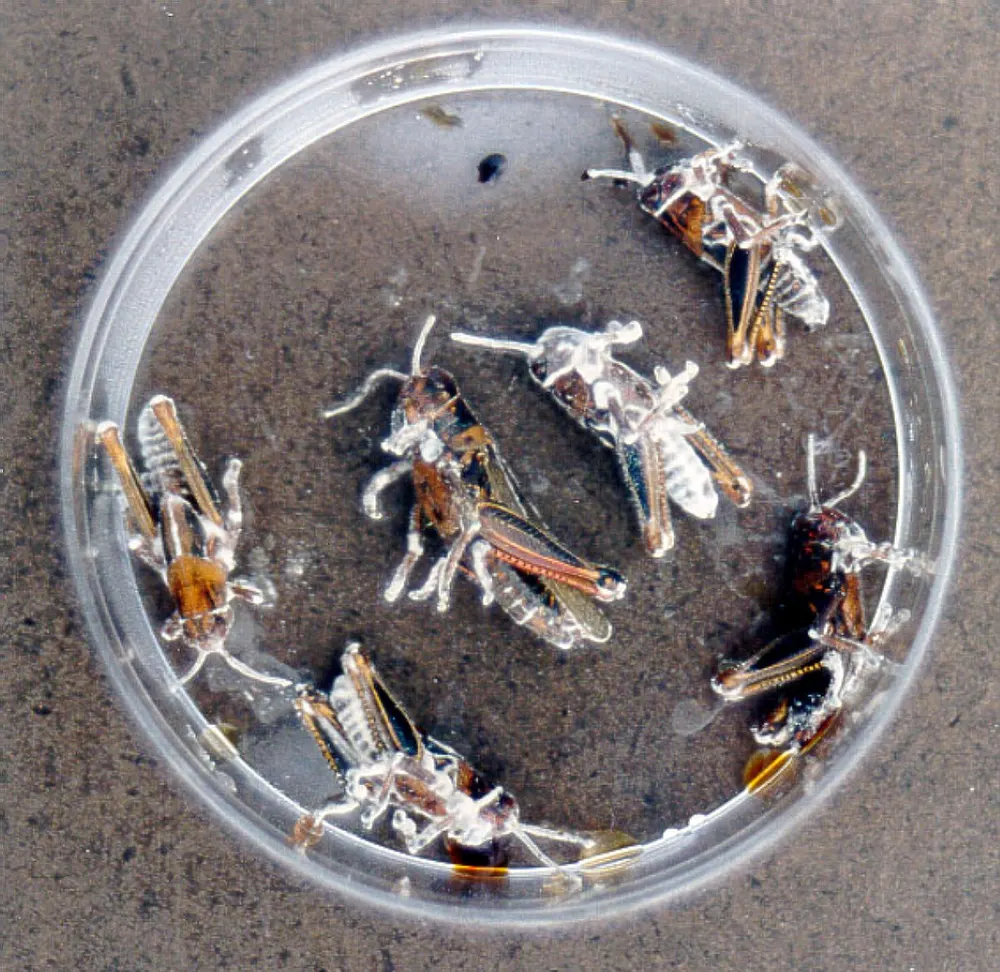
Photo: Stefan Jaronski, Public domain (via Wikimedia Commons)
White Muscardine Fungus
Beauveria bassiana
Also known as Bb, muscardine fungus, white muscardine disease fungus
Key benefits
✦Traditional uses
✦Beauveria bassiana does not belong to the world of kitchen and medicine chest herbs, it belongs to the soil itself, where it has quietly parasitized insects for millions of years. Its place in human history was earned not at the hearth but in the silk houses of northern Italy, where in 1835 the physician and entomologist Agostino Bassi traced a devastating disease killing silkworms back to this very fungus. That discovery, showing for the first time that a microorganism could cause disease in an animal, is now remembered as one of the founding moments of germ theory, arriving decades before Louis Pasteur's own famous work. In the centuries since, farmers and gardeners have come to value Beauveria bassiana not as a remedy but as an ally, a living insecticide that seeks out beetles, aphids, whiteflies, and other pests without the residues left by synthetic chemicals.
How to grow & use it
✦The full apothecary for White Muscardine Fungus
Traditional remedies and step-by-step preparations, a complete growing guide, and how to harvest, dry, and store it, all unlocked with HerbLens Unlimited.
- ✦Remedies & preparations
- ✦ Growing guide
- ✦Harvest & storage
From under $6 a month. Free plant identifications always included.
- ✦Neem oil
- ✦Diatomaceous earth
- ✦Metarhizium anisopliae (another beneficial insect-pathogenic fungus)
“When the garden needs defending and you would rather call in a quiet fungal ally than reach for a chemical spray.”
Agostino Bassi's 1835 discovery that this fungus was killing Italy's silkworms was the first time anyone proved a microorganism could cause disease in an animal, a breakthrough that helped lay the groundwork for modern germ theory.
This is a biological pesticide, not an edible or medicinal herb, and should never be ingested. The spore powder can irritate eyes, skin, or lungs if inhaled, and it can also harm bees and other beneficial insects if sprayed on open blooms.